Monday, April 21, 2025

His Memories


His memories are of fond recollection
those of a young boy awed with the
white-bearded presence of a grandfather
attendant to the hesitant curiosity of a
child. There, too, are memories of a
stoop-backed, pleated-faced grandmother
forever offering hugs and proudly warm
glances, along with little saucers
dancing with raisins and almonds.

So unlike his own father and mother
his grandparents, though stooped
with age, exuded kindness and charity.
His father, he knew, depended on what
he construed as his entitlement to
another type of charity, claiming constant
financial need, when none was there
dismaying and threatening the frail pair.

When the young boy grew older, married
he brought his young wife to visit the
wisps that remained of his grandparents;
worn with time and the efforts of
existence, their faded presence still dear
without peer. Finally, three young
children of his own, there was a funeral
for two aged people, expired in tandem.

Long-lived, the ancient man and his wife
took their leave of the sons and daughters
they had borne and those countless others
successive generations, expanding the
pair's tenuously-transparent existence.
Themselves once young, moving relentlessly
toward the finality of elderly presence.

The heirlooms of the old couple's time
as progenitors of a wide brood, their
heritage and values assessed and widely
acclaimed. Their worldly wealth, modestly
valuable, distributed among the cast of
men and women who owed their
existence to the now-dear departed.

Two unobtrusive, small items went
unclaimed. The grandmother's simple
unadorned marriage ring removed at
death, not left for the burial. The
grandfather's cherished horn-carved
translucent, ochre-shaded snuffbox.
Of no value to the acquisitive horde
dividing between them items of value.

Offered, finally as nostalgia, to the grandson
and gratefully accepted. That grandchild
now looking back, as advanced in frail
years now as was once his grandfather.


Sunday, April 20, 2025

Suffering Children


She listened carefully, as she was trained to do. She was hearing yet another story. There would be some permutations that might make this story slightly different from all the others, but broadly speaking, they fell into a few categories, and the individual stories themselves did not distinguish themselves all that much. A neighbour, or a teacher calling to report a suspected case of child abuse. Even an extended family member might do that. There would be an exchange of information. She would listen sympathetically, attempt to draw out details to ensure she was getting as much of a balanced report of the matter as possible. It has not been unknown for someone to report child abuse, out of personal malice, where none existed. She would offer tentative advice after asking leading questions and weighing the responses.

It was her job. It was what she was trained to do. It was, in fact, what she saw as her responsibility to society. To respond, as much as she could under the law, to protect the well-being of vulnerable children.

There were so many days when she returned home exhausted after a day of listening, allowing someone to ventilate whatever their concerns were. To draw out the essential details. And when those details emerged and occasionally constituted really dreadfully abusive situations where it was clearly imperative for a case worker like herself to visit the home, evaluate further, question the child or children involved, look around at their living conditions, speak to their care-giver -- sometimes she was completely drained of emotion.

Why did people have children to begin with if they couldn’t care adequately for them? This was an absurd, unanswerable question, its only purpose to rage against the injustice of seeing those large haunted eyes of children, afraid of being ‘disciplined’, fearful of a stranger entering the home to ask confusing questions. She had to be careful with those questions. She could not ‘lead’ a child to respond fulsomely, to explain to her precisely what was occurring. For the most part the children involved did not really know what was happening. What was happening to them. They were so accustomed to being abused and neglected, they had no reason to believe normal life for them would be anything else than what they experienced.

And even young children had a kind of intuition, that if they said something that would place their guardian, their mother or their father in a dim light, there might be consequences. Consequences like further abuse after the departure of the stranger. Consequences such as being removed from their home, taken to somewhere like a prison for being bad, for making their parents or their parent dislike them and hurt them. Hurt them in so many ways, telling them that they’re worthless, they’re a millstone, their mother wishes they’d never been born. Slapping them around because they’re in the way, and irritating, annoying little pests.

There were days when she told herself she was functionally and emotionally in need of help herself, to the point where she was incapable of dealing with another familial mess. As accustomed as she was to dealing with these dysfunctional situations passing as families, she would never become hardened to the reality of the misery of a neglected, abused child.

“ I don’t quite know what to do, where to turn”, the faintly plaintive voice fed its worry into her ear. “It’s my daughter, my granddaughter, I worry about my granddaughter”.

“Your granddaughter. Why do you feel you have reason for concern?”

“It’s my daughter. She’s under stress, she always is. She’s a single mother. She’s finding it very difficult to cope.”

“How old is your granddaughter?”

“She’s thirteen, thirteen and some. She has a good mind of her own, and her mother tries to dominate her.”

“Dominate her?”

“Well, she’s very manipulative, my daughter, and controlling, and she doesn’t like it when someone opposes her, expresses other opinions, holds values she doesn’t.”

“All right, and why do you fear for your grandchild?”

“She’s a sensitive child. An intelligent, highly creative, bright child. These are characteristics she shares with her mother, actually. But her mother is exploiting her position as a mother in a very brutal way with her daughter.”

“Brutal? Is she … is she … how?”

“Our daughter is a well-paid professional, she’s had a good education, but she is also violently abusive in her language, her emotions. She has never tried to restrain herself, she spouts invective, really viciously, screams obscenities at her child. She berates her, she undermines the child’s self-confidence.”

“I see. A very strong personality. Has your grandchild complained to you? Have you witnessed any of this, these violent emotional expressions?”

“Witnessed it? Yes, we’ve been the objects of much of it ourselves, my husband and I. And even when our grandchild was much younger she was exposed to it, and had become a victim of it.”

“I see. Yet you’re particularly concerned at this juncture?”

“Yes, this is a young girl in her formative years, uncertain of herself, and her mother is involved in unsettling her, not supporting her emotionally. You can’t keep telling a child that she’s stupid without incurring long-lasting trauma!”

“I agree. I certainly agree, madam. Would you like to make this a formal complaint? We can have a case worker go out to the home and speak to your grandchild.”

“No, I don’t think… I honestly don’t know what to think. Our daughter is in a difficult position. Coping is hard for her. We’ve done our best to help, and we always have, but I’ve reached a point where I hardly know what next to do. I’m worried because she’s also abusing her daughter physically. I’m afraid that she will lose touch with reality in one of her rages.”

“She’s hitting the girl? Is she slapping her with an open hand?”

“Well yes, with an open hand. And later she tells me that it’s her daughter that’s at fault, that her daughter has become physical with her mother. Our granddaughter is taller than her mother, she’s a large girl, strong, but that doesn’t sound like the girl we know. We used to be her secondary care-givers when her mother was at work. Our granddaughter isn’t physical by nature. I used to encourage her when she was young in her early grades, to hit back if someone hit her. She refused, she was adamant, she said she couldn’t do that. So I don’t believe that she initiates physical abuse, even though our daughter claims that as fact.”

“You don’t believe her.”

“No, I know my daughter. I know my granddaughter. They do share some personality traits, but not that. Our grandchild has a natural sense of justice, she has always been that way, she just would not attack without extreme provocation -- to protect herself. She has told me that her mother is relentless, just won’t stop once she’s launched herself into a rage. I recognize her descriptions of her mother out of control. Our grandchild will take to her room, her mother will just invade her there, not stopping for one instant to give the child some relief. And I know what it’s like, my husband and I have experienced the very same abusive behaviour from our daughter. She has always been controlling and abusive, from the time she was a child herself.”

“I see. Listen, if your daughter is abusing her daughter so badly, it would really be helpful if you would agree to having a caseworker go around.”

“I know what you’re saying. On the other hand, I don’t know if I can do this to my daughter.”

“But think of your granddaughter. If things are as rough for her as you say they are, they might progress to a point where she is in real danger.”

“I’ve thought of that. My imagination keeps running away with me. I’ve got a too-vivid imagination in any event, I’m always thinking up dire scenarios. I can’t even be certain that I’m not reacting too strongly to the situation I’m describing to you. But my granddaughter told me on the weekend that her mother had slapped her so hard she thought her nose was bleeding.”

“Well, that sounds pretty bad. That’s serious abuse, that and the verbal tirades you describe.”

“I envision my granddaughter leaving home, just going out the door and instead of going to school, simply disappearing. I’m fearful.”

“I hear you. There’s an element of potential in what you’ve said, it does happen. Will you give me particulars; your daughter’s name and address and telephone number?”

“I … I just can’t, not now, not yet. Can you tell me what the age of majority is?”

“It’s sixteen.”

“My grandchild has two more years to go. “

“Can you afford to put things off for that length of time knowing how seriously dysfunctional your daughter’s household is with respect to her daughter?”

“ I don’t know, I just don’t know. But if I give you the information, and you act on it … You must be aware, I know I am, that mother-daughter relations are often strained, and worse. There must be so many families where what I’ve described to you are common occurrences.”

“Yes, yes that’s true enough.”

“I also want to … you know that I know and most people think of it … well Children’s Aid hasn’t got the greatest reputation for aiding children. There are stories…”

“Yes, you’re right. There are times when things go wrong, when failure results from interventions. But those failures represent a minuscule number of cases. You can’t take those events as representative of the work we do. We’re concerned with the well-being and safety of children, and that’s our prime motivator. We’re skilled professionals in the field, capable of assessing situations and arriving at solutions.”

“Yes, of course. What would happen if our grandchild was taken from her mother? Her father is long gone, he has no interest whatever in the child. He’s never paid anything for her upkeep. He has never in the decade since his absence from her life, even made the remotest attempt to contact her, see the child.”

“I could tell you that in all likelihood you would be chosen at the closest kin to look after the child. She would be placed in your care.”

“And that would destroy my daughter.”

“You think so?”

“I’m grateful to have spoken with you. Perhaps I really needed to someone to speak with, to get some perspective. I’m glad you listened, gave me the opportunity to talk. I’m feeling … a little more … confident -- about alternatives, about the future. It may not make sense to you after what I’ve said, but I think I’d better leave things there.”

“If you change your mind… If something further occurs to convince you that intervention is required, please call back.”

She may not. She may. Who really knows?

There was one bit of information that grandmother related that gave me pause. She described how the daughter accused her father of abusing her. Which the grandfather denied. And the grandmother would not believe.

She was after all, she said, always around, she knew what their child was like, growing up, how impossible she was to control. As an adolescent she suddenly arrived home from school one day and began casually throwing obscenities around. No one in their family had ever abused language and social sensibilities in that way.

It was as though the girl had suddenly turned some corner in her psychic life and become someone they hardly recognized.

When they protested at her changed behaviour and vocabulary she had laughed in their faces. “It’s not words that are harmful” she said, derisive of their middle-class shock. “It’s the way people behave, the way they treat one another.”

What could they respond to that, the woman asked rhetorically. She was right and at the same time wrong. Language needn’t be impeccable, but it should be respectful and they were mortally affronted that their daughter would confront them like that. Her siblings did not, and they were boys. Weren’t girls supposed to be more delicate in such matters, more attuned to propriety?

It’s the mother’s assertion that the daughter had no basis in bitterly charging her father with abuse that had me trying to assess what I’d heard, much later. It’s as though somehow an explanation of that now-grown daughter’s evolving behaviour has its basis in an unspoken and sinister secret that only she and her father share.

That the mother strenuously denies.

We may never hear from her again. On the other hand, if matters escalate beyond what the grandmother can handle in her perceived and ongoing maltreatment of the child, we may hear from her again.

It’s these muddled, non-specific attributions that give me a huge headache. To listen to all of this and be able to produce nothing of value to ameliorate an obviously bad situation that will without doubt result in a poor outcome makes me feel that I’m unable to make too much of a difference.

So, I ask myself yet again. Why is it that people have children? 


Saturday, April 19, 2025

Risk Management


What the hell? The guy’s an absolute moron!

If her professional, highly technical, experienced guidance is as crucial to the program as they’re telling her, instructing her to no-fail appearances at scheduled high-echelon meetings extending into the next six months, and her contract runs out in two weeks, and she’s been informed no funding for extension exists, they’re all village idiots.

“No”, she responded stiffly, wondering how it might be even remotely possible she thought at one time that he was halfway intelligent.

Surprised heads were raised to gaze cryptically at her defiant, yet resigned tone. So unlike her usual brash confidence. “I will not be attending.”

Incompetent assholes, she fumed inwardly more than adequately belying her calm exterior. Can’t tell their own from a hole in the ground. And that hole in the ground was just where she found herself now, floundering without any immediate job prospects, despite her acknowledged professional skills and experience.

Really lucked into that great lottery of life for certain, she thought.

It wasn’t just this, this incident with a well-remunerated contract evaporating. There was more, much more going on in her life that wasn’t joy-inducing. Such is life. And such was her life. Choices, all about choices. And she’d made some really amazing ones. Always certain, at the time she made those choices that they were the right ones. And it’s possible they were the right ones, at that time.

They just didn’t turn out to be anything to celebrate, over time, when those choices more or less fell flat. Leaving her to pick up the sorry pieces, wondering what on Earth had ever compelled her to think that she knew what she was doing when making those choices at those decision-making times.

Who even knows where Jack is now? For that matter who gives a damn?

Well, Steven likely does. He speaks about his father occasionally, less so now than he used to when he was young. Funny thing, that; Jack left before Steven was old enough to understand what a father represented. Still, even as an infant, even when things started going awry, she clearly recalled the child clinging to the man. Resistant to being handed back to his mother by his impatient father who didn’t relish holding his son.

It was his restlessness that had attracted her to him to begin with. She thought it was so romantic, his curiosity about the world, about going places, talking about where he’d been. Turned out he hadn’t been anywhere other than in his fertile imagination. He just wanted to be there.

Where? Anywhere but where he was. He was possessed of a fierce longing to go, just go, leave behind whatever it was that kept him from seeing the world. She often wondered why he settled down to the conventional notions of companionship, marriage, a home and a child. She was glad that he had, but wondered about it. Casually, she wondered, never digging deep into the question that always hovered in her mind. It was as though she deliberately kept herself from delving a little deeper, in case she found an answer that would upset her neat little world that then represented their lives together.

He hadn’t left her to wonder too long. Becoming increasingly edgy and short-tempered, she understood without his spelling it out that she had become a burden to him. The love they thought they had for one another? A stupid illusion, nothing more. It was fun, it was sex, it was attractive for a while, and then it all waned and got stale and became burdensome and boring. Just in time to see the birth of their son.

He gave it a few more months, struggled with his incurable wanderlust, and left. Just left. No note. She understood, though what had occurred. She was left behind, abandoned by someone she persuaded herself to believe she knew. What she had known was a hollow shell with an attractive exterior. She resented his abandonment of her and their baby. But she knew too that she had never realistically considered who and what she was complicating her life with.

History now, but no more readily accepted. That burning, irritated feeling of having been left behind, of rejection was never forgotten. Especially with Steven around to keep it alive. He resembled his father in so many ways. So much for imprinting through observation and emulation - patterning didn't they call it? Well, he could not possibly have absorbed anything about his father in the brief time he knew him; it was his inherited DNA.

Sure, it was his age, that too, but there was an underlying recklessness, and restlessness that elbowed her awareness into recognition of his parentage on the lance side. He bore little resemblance to her side of the family physically, and certainly none that she could recognize in his personality. His character was that of his father’s.

She had no idea what his grandfather was like, Jack was close-mouthed other than to tell her early on in their relationship that his father been an abusively miserable sod of a man, and his mother a screeching hellion. He had nothing to add to that, and since she knew he never bothered about them, satisfied with complete estrangement, she'd let it lie. She did wonder, though, if her errant husband had worried about whether he would become an abusive father to their son, if he remained with them. Then dismissed the thought; he was just simply disinterested in being a father, a husband -- being tied down.

Not that things were any cosier between her and her siblings. Parents gone, long buried. Sibling rivalry between them translated into distance and disinterest. Although they did get together at least once a year, a huge family get-together. It was like meeting with the neighbours who lived far down the street, the ones you knew to acknowledge by a dip of the head, a brief ‘hi’, and that was it. There was no depth to their familial relationship, handily reflecting the lack of curiosity, one about the other.

And here was her kid, her only child, an unruly boy - young man really - who threw her for a loop. She hardly knew what to do with him. He hated school and his school marks and the remarks on his report cards, validated that. She’d tried to encourage him, help with his homework, but he resisted her involvement in his schoolwork, and just curtly informed her to leave him alone, he’d manage on his own.

He did, actually, he struggled on, convinced all his teachers hated him, were out to get him, but he wouldn’t give them the satisfaction or the opportunity. He ran with a group of boys whose nonchalant attitude to school, to social mores and relationships reflected his own, more or less. She was familiar with the faces, with some of the names, and certainly with the attitude.

She'd had it out with him time and again. She was relentless, coming at him with determination, to try to get him to recognize that his association with those others whose circumstances were far less than his would only lead him into trouble. He, at least, she said, had been given some valuable instruction at home, he knew the difference between what could be done and what shouldn't be done. Vague, but he knew pretty well what she meant. Some of his friends had been brought in for petty theft, for reckless driving, for driving while under the influence.

He came right back at her, telling her she was deluded if she thought the way he was brought up was in any way superior to that of his friends. Most of them, he reminded her, had both a mother and a father. True, they didn't have the disposable income his mother managed to earn, but they did all right. They had their values to hand on their kids. They were just being young and carefree, into doing things that stretched the limits of society's acceptance. Most young men did just that, he said, furious with her. Angry because he had no intention of dropping his friends, telling her they were more genuine than the kind of guys she probably hung out with when she was young. His father, for example, he hissed at her, who couldn't stick around long enough to see his own kid grow up.

"So don't give me any more of that shit!" he called after her, as she left the room. Doing so, because she wanted to contain her emotions, wanted to make sure she exercised some decent restraint. Didn't act the fishwife with him the way her husband had described his mother doing to him.

Once he had his high school diploma, she thought he’d think twice about going on to post-secondary, but he thought three times, and the third time was the final one. He got himself a service job and just hung around with his friends, all of them locked into minimum-wage jobs. Spending whatever they made on booze and good times. She began to get on his case, and he said he’d had enough and prepared to move out, to share an apartment downtown with some of his friends.

Nothing she could do about it. And she needed a break from him anyway. The last time an OPP officer drove into their driveway, knocking at the door, asking to speak with Steven, she felt she just wasn’t up to taking it any more. Nothing serious, just checking. He’d been found in possession of more pot than any one person could use, in that Honda she gave him when she bought a new one. This cop had a habit of stopping him on the road sometimes, just checking… He’d earned a local reputation. Even in the little backwater where she’d had her dream house built, a half-hour drive out of the city.

She would shrink inside, in an agony of disquietude when she heard Steve and a few of his friends laughing about that law enforcement officer. They called him "Kamikaze" because of his appearance, wouldn't take him seriously, thought he was an absolute gas. The man was short, stocky, with an impassive face, though he made an effort to smile, apologetically, each time he knocked at the door and she would answer.

He had confided to her that it was his opinion that her son would come around, and so likely would the other boys. He was convinced that his constant presence would act as a reminder to them, and they'd outgrow their fascination with the illicit. He knew, he laughed once when speaking with her, how he was regarded by them, as though he represented an absurd caricature. He didn't mind that, he was used to it. He wanted to spare them, if his pop-up appearances did the trick, of thinking they could commit more serious infractions, unnoticed by the law.

She appreciated his frank explanations. She appreciated that he cared. She thought what a decent man he was, so different from so many of the others. And how difficult it must be for him, a Japanese-Canadian whose presence was anything but commanding, even in that official uniform, to lay down the law. That her son and his friends had no respect for him and what he represented pained her.

That was another contentious issue between them. Steve just couldn't believe she was angry about that. What was the cop to her? Did she care more about the tender feelings of some ridiculous-looking, hard-boiled law-enforcement officer than she did about him? What the hell?!

That had been the occasion of a really incendiary battle. This time she hadn't stalked out of the room, she stood there, reminding him that some decent man cared enough about the welfare of kids like him to put himself out on their behalf, even while knowing they despised him and held him in contempt for doing his job.

Their argument became so heated that at one point she shoved him backward, onto the sofa. He bounded back, grabbed her by the shoulders and shook her, painfully, until she thought her neck might snap. He was a full head and a half taller than her. That little episode sobered her.

So he moved out, and she got a pair of little dogs to keep her company. Two small Shih Tzu; hairy, yappy little dogs. But she grew to appreciate having them around. At least they were warm and alive, and liked her. Glad when she arrived back home, their fat little bums wriggling from side to side, yapping, endlessly yapping. See squirrels out of her big picture windows, and they’d go into a paroxysm of hysterical yapping. But they were company.

When Steven saw them on his occasional visits - mostly to ask her for money -- he’d been intrigued at their presence. Next thing she knew, he told her over the telephone that he’d got a little dog himself, a boxer. It wouldn’t be little very long, she told him.

But while it was, Steve and his friends were having a good time with the dog. Good time? She discovered later, that they took turns slamming it against the concrete wall of the apartment garage just for laughs. When he told her that she was horrified, and told him he was an idiot, no one should abuse an animal like that.

“Hey, Mom, get a grip” he said, clearly amused. “We’re just showing the dog who the alphas are. See, he’s a stubborn little bugger, and when he doesn’t do as he’s told, that’s his punishment. He’ll get the picture, eventually.” He never did.

When Steven moved back in with her after a year ‘on his own’ -- tossed out as bad tenants, him and his buddies -- he brought Buddy home with him. Buddy walked in as though he owned the place; nothing insecure about that dog, she thought.

And then she screamed, as he lunged at one of her little dogs, closed his big mouth around the small animal, and shook it from side to side, her little dog yelping horribly. Steven kicked his dog, hard, and her little dog fell to the floor, stunned. That was their introduction.

She wanted him to leave, she was hysterical with anger and fear. “Got nowhere to go, right now, Mom”, he said, reasonably enough.

“Well, then just get rid of that monster! I can’t have it here, it’ll end up killing my dogs!”

“Hey, that’s all right, Mom”, he said, soothingly, holding the snarling boxer firmly around the studded collar on its thick neck, as it tried to strain itself toward her cowering dogs. “I’ll keep him outside, in the garage. He’ll get used to living in the garage. You won’t have to see him.”

The dog was clearly psychologically damaged, and little wonder. It had psychotic episodes, but for the most part it would appear mild tempered and playful and her heart went out to it.

She wondered, briefly, what was the matter with her. Investing her concern in animals, instead of worrying about her son. Then she acknowledged that worrying about her son, like wondering about her husband, accomplished nothing. Only time would, and she couldn’t guess what the outcome might be.

There were some things that just couldn’t be managed. Time would do the managing. She laughed bitterly to herself. That was, after all, her profession: risk management. 
 

The Greatest Show On Earth


Last night a slow rolling, rumbling
series of thunderous claps roiled the
sky like an endless fusillade of cannon
fire - while its companion lit up the sky
like celestial fireworks designed by a
higher order. Rain washed the dark
diorama, a drama presented courtesy
of nature, thrilling and impressing
mortals with the passion, the power
and majesty of magnificent direction.

Truly, the Greatest Show on Earth.

Throughout the night, into the morning
hours, the show went dauntingly into
overtime. After the applause, when the
curtain lifted to an overcast day, there
were, outside our windows, early spring
robins, in the branches of our ornamental
Sargenti crab trees, feasting on red haws.

In the drenched woods, bare tree trunks
black and glistening dominated the arras.
Where green lichen was fastened, it
fluoresced, soddenly. The delicate creep
of mosses on the ground, on bark and
branches glowed softly, brightly. Tiny
scarlet florets, fallen from Maples, littered
the ground, and tassels of Poplar and Birch,
pollen-laden; green, white, wormlike.

The creek and its many rivulets cascading
through the ravine have swelled, dark with
storm-tossed particulates; in the fury of
the pulsating waters, thrusting along fallen
twigs and branches. Candy-green, minuscule
leaves edge out from hazelnut and dogwood.
A soft humidity steams over the landscape,
as a green haze of awakening leafage emerges.


Friday, April 18, 2025

Letter


Our dearest child, it is a matter
of the deepest regret and profound
anguish that we have so utterly
failed in bestowing upon you the
understanding of quite how much
you are loved by us, your parents.

Your father professes to know the
psychological basis of your deep and
now immovable psychosis; your belief
that you were an abused child. I have
no such pretensions to knowing where
your grievance emanates from. My
memories as your mother defy yours.

I think: how can it be possible that
two young parents, in perfect harmony
devoted to their three children, living in
a stable emotional environment,
expressing their care and love for one
another, have yet produced a childhood
so inimical to healthy maturity?

Your personality, like those of your
brothers, is uniquely your own. Unlike
theirs, yours was demanding, abrasive,
defiant, nettlesome, creating a chaos
of confusion among and within us. A
firmer direction than theirs was yours.

But support, stimulation, and opportunities
to advance your interests and skills were
also there. As a young family we shared
and encouraged and experienced together
all manner of social, cultural, adventurous
and mind-enhancing events, binding us
as a loving unit, in healthy accord.

Few efforts were spared by us on your
behalf; we spoke freely and encouraged
open debate and thought. Your formative
years, you inform us now and again, were
freighted with a burden of blame and
accusations where you were singled out
for parental censure, unlike your siblings.

To this psyche-crushing past are all
your ill choices in life and their sorry
conclusions attributed. We anxiously
search our flawed memories and find
nothing there consonant with yours.
What we do recall, even as we continue
experiencing more of the same, is a
child mature in years, still testing us.

So, dear child, we apologize for our
inability to serve your needs, our
incapacity in ensuring that you were
well blessed with that most basic of
childhood needs; an inviolable sense
of security and trust. And confidence
in yourself. You were, and remain,
capable, intelligent, motivated, talented.

That heavy, black cloud of discontent,
that elusive sense of happiness and
satisfaction denied. That we never managed
to lift that oppressive dark cloud long
enough for the rays of comfort and content
to settle over you is a matter of profound
unhappiness to us. As it has always
been for you, our very dear child.

If our realization of having dismally
failed in that most elemental task of
parenthood cannot aid and comfort you,
we understand full well that nothing
will ever emerge to help heal that
festering wound. For that, we are
immensely sad. What else could
we have possibly done back then?

The clarity of my memory refreshes
the vision of a child whose incessant
anger and grievances would not be
abated. One whose bleak lack of joy
brought unease to my heart. Of an
adolescent whose hateful invective
lashed our sensibilities. Of an adult
whose emotional attachments remained
tenuous and fraught with controlling
spite, ultimately severing all intimacies.

And there we were, in the background,
quietly helping to piece together the
fragile remnants. And here we are,
yourself now mother of a young girl
emerging into early adulthood, and you
possess her, inserting yourself into her
pride of self, autonomy of thought and
action, finding fault where none exists.

We despair. Fearful for your teetering
balance of mind and incendiary thought.
You hiss your disdain of us, though
need is absent, for we cower under your
withering voice. We anguish for our
grandchild, and dread our fear of the
future. What more can we possibly do?


Thursday, April 17, 2025

Untitled

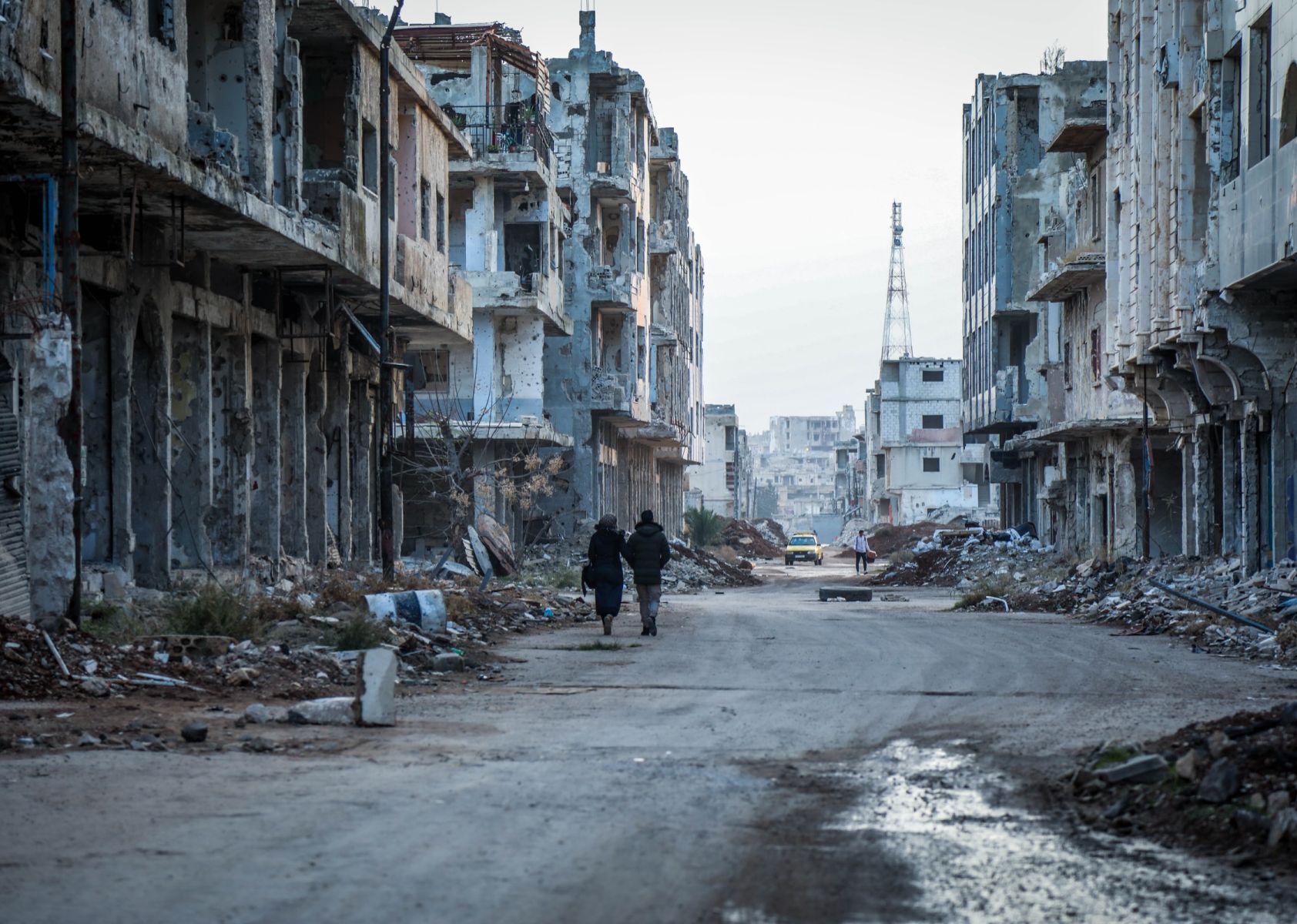
 https://geneva-academy.ch/images/News/2022/2022_Armed_Conflicts_RULAC/Armed_Conflicts_in_Middle_East_and_North_Africa.jpg

When you think of war do you think of guns?
Do you think of people getting a free pass to kill?
Do you think of Slaughtering?
Do you think it’s either his life or yours?
War: a conflict carried on by force of arms,
as between nations or between parties within a nation;
warfare,
as by land,
sea,
or air,
armed fighting,
as a science
profession,
activity,
or art;
methods or principles of waging armed conflict.
I think of the children who are orphaned,
I think of a dad, husband and child of someone walking out of his tent,
doing it for his baby at home,
so its safe for her.
Combat: to fight or contend against,
a fight,
struggle or controversy,
as between two persons,
teams or ideas.
It all comes back to survival;
this is how the human race survives,
by killing others.
Conflict: a striking together,
collision,
Is it better to do the right thing for the wrong reasons,
or the wrong thing for the right reasons?
Warfare: armed conflict between two massed enemies,
armies.
When you join the army,
you are seeing the world,
meeting new and interesting people,
then killing them.
Fighting: tending or meant to stir up a fight or hostility.
Confrontation: a bringing together of ideas,
themes,
for comparison.
One thing about war is:
it doesn’t determine who was right in the end,
only who is left.
Battle: a hostile encounter or engagement between opposing military forces,
a fight between two persons or animals.
Is it a crime to kill people to save other people?
Campaign: a systematic course of aggressive activities for some specific reason.
Fray: a fight,
battle,
or skirmish,
a noisy quarrel or brawl.
My one question: Why are we trying to make peace by fighting?
Peace: a state of mutual harmony between people or groups.

Seen through the lens of a 13-year-old girl's poetic muse.

Wednesday, April 16, 2025

Living Her Age


I think it likely that people who have not been here will be interested to know what it is like. I arrived on the thirtieth of November, fresh from care-free and frivolous 69, and was disappointed.
There is nothing novel about it, nothing striking, nothing to thrill you and make your eye glitter and your tongue cry out. “Oh, but it is wonderful, perfectly wonderful!” Yes, it is disappointing. You say, “Is this it? - this? After all this talk and fuss of a thousand generations of travelers who have crossed this frontier and looked about them and told what they saw and felt? Why, it looks just like 69.”
And that is true. Also it is natural; for you have not come by the fast express, you have been lagging and dragging across the world’s continents behind oxen; when that is your pace one country melts into the next one so gradually that you are not able to notice the change: 70 looks like 69; 69 looked like 68; 68 looked like 67 - and so on, back, and back, to the beginning. If you climb to a summit and look back - ah, then you see!
Down that far-reaching perspective you can make out each country and climate that you crossed, all the way down up from the hot equator to the ice-summit where you are perched. You can make out where Infancy merged into Boyhood; Boyhood into down-lipped Youth; Youth into indefinite Young-Manhood; indefinite Young-Manhood into definite Manhood; definite Manhood with aggressive ambitions into sobered and heedful Husbandhood and Fatherhood; these into troubled and foreboding Age, with graying hair; this into Old Age, white-headed, the temple empty, the idols broken, the worshippers in their graves, nothing left but You, a remnant, a tradition, belated fag-end of a foolish dream, a dream that was so ingeniously dreamed that it seemed real all the time; nothing left but You, centre of a snowy desolation, perched on the ice-summit, gazing out over the stages of that long trek and asking Yourself “would you do it again if you had the chance?” (December 1905)             Mark Twain
**********************************************
He had pottered about most of the afternoon, and so had she. At their age winter seemed to last longer every year. Behind them now; they were in early spring. And it was quite wonderful. They were now able to go out of doors without hauling on heavy overcoats and boots. Same for their little dogs. Figuring what was needful for themselves was no less so for those very small creatures sharing their lives.

He had, earlier in the day, read aloud to her a short, succinct and somewhat bitter observation about growing older and becoming ensconced in old age, by none other than Mark Twain. They’d both laughed, not uproariously, but knowingly.

Still, they were doing pretty well for a pair of old codgers married 55 years with no end in sight of their partnership nor their love for one another. Thankful for their good health, and the immense enjoyment of their lives. And they had ample to be thankful for.

In the afternoon he had hauled out from the basement where it was stored over-winter that huge brown canopy - now faded by two summers’ exposure, into a softer shade of brown -- to fit it over the metal infrastructure that comprised the form of the canopy shielding them from direct sun exposure, on their backyard deck.

While he was busy doing that, refusing all offers of help from her, she was out at the front of the house, hauling out lilies that were crowding into other beloved perennials. Something she should have done last fall, but was too busy with other garden chores, to attend to that one.

It was a warm day, unseasonably warm for early spring. There was a robin singing from the top of the ash tree across the street, and its trill was loud and sweetly brilliant, thrilling her to her very core. It was her husband who took their older dog downstairs early in the morning to let it out to the backyard while she slept in a little longer. With the younger, smaller one right beside her, directly under the covers. And her husband always whispered to her, when he got back into bed, how liltingly beautiful the trill of the cardinal was in the backyard at that early morning hour. Or the song sparrow, or the chirping of chickadees, which she always seemed to miss.

She felt guilty, she always did, that he was the one to go out so early; get up out of their warm and comfortable bed, to meet an obligation their 17-year-old dog required. The consequences of not doing so were unpleasant, but even when that occurred her husband, refusing to scold their little dog, did a good-natured clean-up.

She felt guilty because she really got a better night’s sleep than he ever did. He was up repeatedly, thanks to his bladder being pressed by his oversized prostate. He did a half-hour of therapy -- kegel it was, to strengthen the bladder muscles -- every day -- sitting, counting the number of muscle-tensing exercises he performed, until he finally reached into a figure that satisfied him. When he’d first started doing this, years earlier, there had been an improvement, and they’d anticipated ongoing improvements, but they’d been tardy in unfolding. The initial improvement remained, but the promise of other, greater improvements simply did not materialize. He was grateful for the relief that did occur, and remained wedded to the exercise protocol to ensure that at the very least, that minimal relief remained.

He always said since he had to get up at six anyway to relieve himself, it was no additional bother to go downstairs with the little dog and take her outside. He would go out with her in case the raccoon was around. Even though he put bungees on the composters the resident raccoons never seemed to give up hope. They had disagreed about that, about tying down the composter tops to dissuade the raccoons from their night-time raids, because before tying down the tops they’d come around regularly and never left a mess. She didn’t begrudge them whatever they could use from their kitchen waste. But her husband reasoned that they were a threat to their little dogs, particularly their ten-year-old toy poodle, because it was stupidly aggressive and wouldn’t hesitate to attack any other animal impinging on his territory.

So that little routine was his and his alone, up out of bed as soon as he heard the female dog leap off the loveseat in their bedroom where she slept the night. Tie on his cuddly white dressing gown, tromp downstairs after her, out the sliding glass doors into the back garden. While she remained blissfully in bed, to sleep another two hours. It wasn’t fair, but it was their ritual and although they lived with it, she remained uneasy at her too-easy capitulation to his reasoning.

By early afternoon that day, after he had finished cleaning out the garden shed and re-assembling everything neatly back into it, placing the snow-thrower right at the very back where it wouldn’t be noticed again until the snow began flying, and she had finished her little bit of gardening, they wondered at no telephone calls. And it occurred to him to pick up the receiver and listen. No dial tone.

She’d done it again. Picked up the telephone sitting directly beside her upstairs desk-top computer, and not replacing it properly in its cradle. So the telephone was effectively out of commission all day. They’d been on tenterhooks, waiting to hear the results of their daughter’s job interview. Even if she’d dialled their cellphone it would never be heard. The cellphone was tucked securely into his shoulder bag, hung in the cupboard next to the door leading to the garage. It was only used when he was out of the house, checking back to let her know where he was, when he’d arrive home from his errands.

And sure enough, the upstairs telephone hadn’t been properly secured. He said nothing, but she felt the fool. Again. It happened so regularly. Their granddaughter would sometimes text-message her and next time she’d retrieve her email she’d read “Grandma! You forgot to hang up the telephone again!”

Damn! She cursed her lack of attention. If their daughter called, tried to contact them, leave a message, she couldn’t. He had finished his work. Had gone down to the basement store room to pluck a pair of long cushions out of there, and take them upstairs to make the glider plump and comfortable for her. “There”, he said, “just sit there, get yourself in the mood to relax”. He’d even brought the newspapers out for her, and the mobile telephone, now in working order. She set it beside her, under her skirt, and beside her on the other side, he sat their apricot poodle, a lazy little dog that wanted nothing but to cuddle and to sleep.

Then he sat himself across from her, and discommoded at the temporary absence of his mini-laptop, was fiddling with a short-wave radio. The laptop was used for nothing but listening to radio stations, anyway. Like National Public Radio. He valued the debates, the in-depth news coverage, the flow of the conversations. She preferred her newspapers. And the laptop? In for repairs. It had taken a serious dive. Actually thrust itself out of her husband’s hands as he was conveying it from the dining room to the breakfast room. And arced straight across from the kitchen onto the porcelain tile floor of the breakfast room.

This was a lovely floor, in black-and-white squares, very classical, and it was pleasant being able to see it through the glass top of their breakfast-room table. But this was most definitely not a surface that dealt kindly with suicide-prone baby-computers. What had been whole became pitiably fractured. Her husband had been stricken. As much as their little dogs were animated companions, his laptop was an inanimate companion, one that informed and pleased him mightily.

He swore, (she thought swiftly, now there’s an end to all that incessant noise; good riddance). He picked up the pieces, and examined them. Actually, the computer did not completely shatter; there was merely the separation of a few pieces, one of which was the long metal hinge covering the vital conductors between screen and hard drive; the other the sliding door covering the battery. And, after putting it all back together, slowly, carefully, hopefully, it worked! “Isn’t that fortunate” she said dryly to her husband. He grinned back at her, triumphantly.

But in the days that followed it became clear that the little computer was feeling a trifle queasy, not quite up to itself. One of the hiccoughs was that it was no longer keen on following orders. As in ‘shut-down’. It would display the message that it was ‘downloading updates’, but that was merely a ruse. It was downloading nothing, just taking him for a fool. In it went for critical care, and he was bereft of its presence, he even thought of teaching it a lesson by acquiring a second one. Prudence prevailed.

So now, fiddling with the short-wave radio he zeroed in on the weather, and then went to the local news. One of the news items was of a very local accident. The area, an hour’s drive from where they lived, was almost where their daughter’s house was located. A fatality. She felt her face grow heavy, and her chest pinch. So well did he know her that he looked sharply up from the radio and regarded her. Quietly, he said, that wouldn’t be her. Don’t you start worrying now, over nothing.

When she worried and got tense and upset her body went into lock-down. She would develop a rash, and break out in dreadful, suppurating sores. Her gut would refuse to process the food she ate. She would feel ill, and there would be a shut-down of her alimentary canal. He dreaded that; she put up with it. Their son, who lived halfway across the country, occasionally would send his mother books with titles like “Women Who Worry”, and “How To Deal With Stress”. She would dutifully read partially through each of these self-help books, then have a conversation with herself about how idiotically presumptuous people were to write such witless, useless tomes. The books would be shelved, she would thank her son, and go back to worrying.

Her husband tried to engage her mind, wanted to talk about their imminent vacation, but she felt capable of nothing but nodding her head in agreement with whatever he said. Suddenly, the piercing call of the telephone. They both jumped, and she looked frantically for the telephone; not on the little table before them, while he rushed into the house to grab it off its cradle. She was puzzled; the sound was so clear, so near, and when he came back with a disgruntled look on his face reminding her that it was in her direct possession, she remembered she’d placed it beside her, covered by the fabric of her skirt.

She was, quite frankly, amazed at her inability to react, to understand fully what was happening, instead of being thrown into the panic of blank confusion. The telephone rang, clearly enough, loudly enough so that it registered that it was there, right there, not inside the house, but there, beside her, where she had secured it in just the very event that it would eventually ring, and she would respond to the ring. Instead, she had been confused, blanked out, couldn’t recall she had a mere half-hour earlier placed the telephone beside her, secured it so she could simply pick it up and respond. What was wrong with her?

“Hello?” she said, holding the telephone close to her left ear, hoping she wouldn’t have to confront, this time, a situation where, as so often happened increasingly, she could barely hear the words on the other end. Her faculties, clearly, were on the fade-end of usefulness.

“Me”, came her grandchild’s voice. “What’s going on?”
“Just home from school?” she asked the girl. “Had a snack yet? Got much homework?”
The usual. She was speaking in a clear, calm voice, nothing betraying the disquietude she felt. Fearful that the girl’s mother, a single parent with huge responsibilities would be unable to find another contract quite as quickly as she hoped to, fearful that the child was at home, alone, while her mother was still out somewhere, fearful that it was her daughter who’d been involved in an accident nearby her home, fearful that she herself was beginning to sink into a morass of old-age inclemency, where she could no longer depend on herself to react appropriately even to minor, day-to-day situations.

She would be going out this evening, after dinner, to do the canvass for her street. Something she’d done for more years than she could even recall, unless she really put her seemingly overworked mind to  it. She still did that three to four times a year, for various health charities, collecting donations from their neighbours, writing out the receipts for tax-deduction purposes.

It was fine, she got through the process, even though it was one she detested. Going to peoples’ houses, knocking on their doors, appealing to their better natures to donate a few dollars for charity. Mostly, their neighbours responded well, and she was grateful for that. Not so grateful for the sense of dislocation that would occasionally overcome her; unable to even remember the house number while writing out the receipt, attempting a feeble stab at humour to cover her confusion.

And feeling overwhelmed, sometimes, not knowing quite why she would feel like that, but she would suddenly feel weak, tired, chest tight, and one of her neighbours would bring her inside, tell her to sit still for a few minutes. These episodes she kept to herself, unwilling to share them with her husband. Because, really, there was nothing at all wrong with her. She had plenty of energy and stamina, more than capable of brisk walking for lengthy distances, cleaning their large house, working in the garden. All things she took pleasure in. Just that, occasionally, going up the risers at a good clip she would suddenly feel a loss of strength at the top of the stairs, and have to lean against the wall for a few minutes until the spell passed.

That need not necessarily happen this evening. Just a by-product of aging, obviously. The weather is gorgeous and there’s no reason not to get out there and finish up the canvass. Her neighbours are, after all, anxious to off-load their excess earnings in a good cause. And anxious too, come to think of it, to exchange neighbourly and neighbourhood information occasionally called gossip, with her. She hasn’t much to gossip about, but she is a good listener. And people like that.

Not long afterward, she did speak with her daughter. The interview went well. But the company isn’t really doing the kind of things she does; she’s a little higher on the professional scale. They wouldn’t be prepared to pay her what she knows she should be earning. She wouldn’t be working out of the house, from her home office as much, working there. She wouldn’t have the autonomy she now enjoys. And she has her doubts that she’ll be offered the job.

Later, on the late-night local news, when she returned from canvassing her street, they both listened to the details of the accident which she hadn’t mentioned to her daughter. It was, evidently, caused by a woman who hadn’t obeyed a stop sign. Went right through. Hit head on with a transport vehicle. Not much of a power contest with the Volkswagen Jetta that the woman was driving. One death, the only occupant of the Jetta, the driver. And the driver? A long-time area resident, a 93 year-old woman.

How’s that for living your age?