Showing posts with label Culture Clash. Show all posts

Thursday, April 17, 2025

Untitled

 https://geneva-academy.ch/images/News/2022/2022_Armed_Conflicts_RULAC/Armed_Conflicts_in_Middle_East_and_North_Africa.jpg

When you think of war do you think of guns?
Do you think of people getting a free pass to kill?
Do you think of Slaughtering?
Do you think it’s either his life or yours?
War: a conflict carried on by force of arms,
as between nations or between parties within a nation;
warfare,
as by land,
sea,
or air,
armed fighting,
as a science
profession,
activity,
or art;
methods or principles of waging armed conflict.
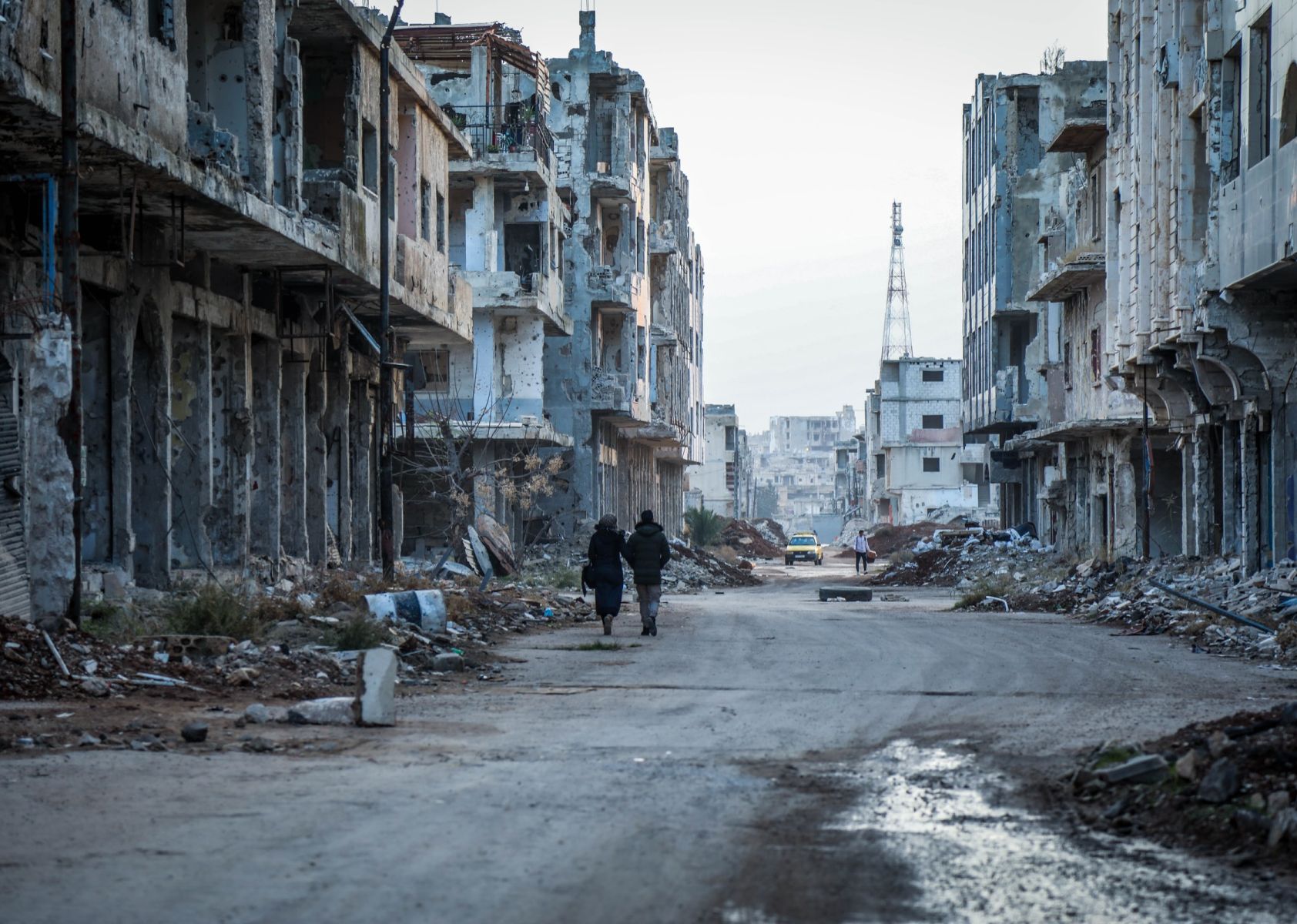
I think of the children who are orphaned,
I think of a dad, husband and child of someone walking out of his tent,
doing it for his baby at home,
so its safe for her.
Combat: to fight or contend against,
a fight,
struggle or controversy,
as between two persons,
teams or ideas.
It all comes back to survival;
this is how the human race survives,
by killing others.
Conflict: a striking together,
collision,
Is it better to do the right thing for the wrong reasons,
or the wrong thing for the right reasons?
Warfare: armed conflict between two massed enemies,
armies.
When you join the army,
you are seeing the world,
meeting new and interesting people,
then killing them.
Fighting: tending or meant to stir up a fight or hostility.
Confrontation: a bringing together of ideas,
themes,
for comparison.
One thing about war is:
it doesn’t determine who was right in the end,
only who is left.
Battle: a hostile encounter or engagement between opposing military forces,
a fight between two persons or animals.
Is it a crime to kill people to save other people?
Campaign: a systematic course of aggressive activities for some specific reason.
Fray: a fight,
battle,
or skirmish,
a noisy quarrel or brawl.
My one question: Why are we trying to make peace by fighting?
Peace: a state of mutual harmony between people or groups.

Seen through the lens of a 13-year-old girl's poetic muse.

Sunday, February 2, 2025

Freed At Last


The Book of Women 4:3

English translation by M. H. Shakir

"You can never be equitable in dealing with more than one wife, no matter how hard you try. Therefore, do not be so biased as to leave one of them hanging (neither enjoying marriage, nor left to marry someone else).... "

The viper that consumed her heart and her spirit, the adder that took dainty nibbles of her liver and her spleen, the asp that sucked the very marrow of her bones; defeated, all. Her vital organs consumed, she has peace. Her agony of existence dissipated. She awaits the final release of Death. To be welcomed as a pious Muslim to her everlasting reward.
IN the context of proper attire and conduct, the Quran lays down one basic principle, namely, modesty which is stated in Surah 24: 30-31: Tell the believing men to lower their gaze (avoiding its concentration on a person’s body, or a certain part of it) and to be mindful of their chastity; in this they will be more considerate for their own well-being and purity, and surely God is fully aware of all that they do.
And tell the believing women to lower their gaze (avoiding its concentration on a person’s body, or a certain part of it) and to be mindful of their chastity, and not to display the charms of their bodies (in public) beyond what may (decently) be apparent thereof; hence, let them draw their head-coverings over their bosoms.
And let them not display (more of) their charms to any but their husbands, or their fathers, or their husbands’ fathers, or their sons, or their husbands’ sons, or their brothers, or their brothers’ sons, or their sisters’ sons, or their womenfolk, or those whom they rightfully possess, or such male attendants as are beyond all sexual desire, or children that are as yet unaware of (the physical attractions of) women’s nakedness; and let them not swing their legs (or other actions in their walking) that may aim to draw attention to their hidden charms.

They too, are at peace, saved from themselves. They will be re-united with us. No vestige of the struggle will remain, between their unheeding denial of God's instructions and their final submission. That submission to His divine will complete, irrevocable.

Her inner furies erased by the grace of God, she is prepared to embrace them; her sister, her daughters. Compassion now replaces enmity. Calm resides in her breast; an hitherto-unknown quantity; a soul-restorative.

Allah absolves those who do His work. He takes them gently unto Himself, cradles their weary essence, brings them final comfort.

You it was he loved, not me. His choice was you, when he had from among so many to make his selection. In our tribal village, the dashing, handsome great grandson of the village founder, son of the tribal chief, an integral portion of the wealthiest local family; he chose you, Dahlia.

The homely one, his first cousin with whom he shared childhood memories. Quiet and unassertive, her only obvious quality one of kindness,warmth of presence. Her form dense, already matronly. Why her? Years passed and she did not conceive. Whispers ran through the village. His family took note, and became impatient, yet he begged them not to press him. When several more years passed it was clear she was barren, a disgrace to herself and to her family.

When he set her aside, gave her freedom to leave, her family would not welcome her return, they disowned her. And when his eyes turned elsewhere though his heart was heavy, he looked at younger women, and in particular one whose clear complexion, long, lustrous black hair, sultry eyes and vivacity marking a vast contrast to his cousin became his choice.

She, Amirah entered his life. And she made his life pleasant and comfortable so he might wish to remain with her. When her father informed her of Almadhi's interest she was happy beyond comprehension, and she was anxious for formalities to be concluded, for the ceremony of marriage to be done with, to have him welcome her into his strong arms. It did not take long for her to pridefully advise him and her family that she was bearing his son.

For a son it was; Alhusain, their first child. She had fulfilled his desires and his need to have a son, and there would be more children for she was fecund and more than prepared to do all that was expected of her.

When Alhusain was yet an infant her husband became restive, and it was clear he was dissatisfied with something. Her relief was great, but she came close to despair in any event, when he advised her he had begun proceedings to emigrate with his family to North America.

She dutifully made all the required arrangements on her part, and determined which of their belongings would accompany them. Drying her tears she did what a good wife must do to follow her husband. She was fearful of leaving her family, her friends, her village, her society. And then, a catastrophe; a fortnight prior to their departure, Almadhi claimed to have had a vision and in that vision he was instructed to bring Dahlia back into his household. She would, he informed her gravely, aid her in the raising of their children, for Amina was yet again gravid.

She knew, even before they left, that Almadhi would be visiting Dahlia in the night-time hours, for he was permitted as many wives as he could afford to support, and he could afford to support more than merely two wives. From scorning the woman who she had replaced, she turned to detesting her and spoke harshly to her, although Dahlia made no protest.

When they settled in their new place on another continent and Atifah was born, Dahlia held the child as though she were hers and hers alone. She brought Atifah to Amina to be nursed, and did everything else for the baby, leaving the care of Alhusain to his mother.

Amina resented Dahlia on the one hand, but was grateful that she was spared having to look after an infant and a baby on her own. She was unrelenting, however, in her spite toward Dahlia and would never permit her to forget that she had been the spurned one and it was Amina who had brought honour to Almadhi's family, not she. Dahlia would never respond, merely dip her head in assent.

And then two other babies were born in fairly short order, two more girls, Daniyah and Bhashira, and Dahlia opened her great heart to the new babies each in turn, while their mother turned away from them. The three girls felt Dhalia to be their mother, for it was she who comforted them, encouraged them, supported them. With Almadhi's approval, Amina focused on their son, and Dahlia on the three girls.

And Amina's hatred for Dahlia, even while she gave up maternal custody of her three girls to Dahlia, festered and caused unrest in the family. Almadhi chose to ignore the tension, and he continued also to take his conjugal rights with Dahlia, far more often than with Amina, which she knew, and which drove her to a frenzy of raging acrimonious execration.

Dahlia deftly, in their large spacious home, kept to her own apartment, and it was there that the three girls spent most of their time at home, as well.

Almadhi's business continued to flourish, and life was good to the family. Their circle of friends and acquaintances remained firmly within the Muslim community where they were well known. Dahlia, however, was open and committed to casual friendships with those of their neighbours who were non-Muslims, and this too infuriated Amina, and she demanded that Almadhi do something to discourage this un-Muslim-like behaviour, one that their regular Muslim cleric, the respected imam of their mosque warned against.

As the children entered adolescence and beyond, the girls began to emulate their beloved Auntie and became freely engaged outside the confines of their home, with their peers who were not Muslim. When this became apparent to Amina, she railed against the girls' behaviour, warning them that their father would not approve of it.

And when she informed Almadhi of the girls' indiscretions he became more alarmed than she might have imagined. He brought the girls to his study and lectured them sternly, and later spoke privately to Dahlia, forbidding his children to mingle with non-Muslims in any kind of social situation.

As the years passed and the girls became older, one 18, the second 15, the last 13 years of age, tension in the household increased. Particularly as their mother announced she and their father had decided their girls would now not only wear the headscarf, but also begin wearing an abiya.
the girls were horrified and Dahlia was distressed for them.

As soon as they left the house they would discard the abiya, push it into their school bags, to be retrieved when departing school for the return journey home. But Alhusain, witnessing this, reported it to their father. And reported also that his sister Atifah had been seen speaking to non-Muslim men.

The household became a hothouse of accusations, denials and counter-accusations. The girls were desperately unhappy and their aunt became extremely worried for them. Nothing was resolved despite the threats of dire punishment, for the girls became more defiant, refusing to even wear the abiya on leaving home and Dahlia tried to explain to Almadhi who was not closing his mind yet to her, and to Amina, who loathed her, how in their new country the girls were being influenced by other social mores that would not impact deleteriously on their personal faith.

Almadhi became furious with Dahlia, something that had never before occurred. And Amina watched, fascinated, as he set Dahlia aside, refusing to hear her out, shunning her company. And it was when Almadhi approached Amina, together with Alhusain, and, face stone-hard, infused with an anger they might never have suspected resided in him, said they must take steps to save their family's honour.

So it was that a dreadful accident occurred, when one of the family vehicles driven by Atifah, with her aunt sitting beside her and her sisters Daniyah and Bashirah seated in the back somehow managed to plunge into a wintry-icy canal, in the city where they lived. The submerged vehicle and the four dead bodies were discovered by a police patrol, for their family had reported them missing.

A truly dreadful tragedy. The three remaining family members went into deep mourning.

It is in a jail operated by infidels that they now await trial and judgement by kuffars; completely unjust, without divine guidance, meaningless. 


Thursday, August 29, 2024

Does Anti-Semitism Exist In Japan?


There has been a spate of articles recently in various news media alleging that anti-Semitism is rampant in Japan - if not rampant, then thriving in fertile soil and about to become epidemic. Could that be so? For what reason?

From my personal perspective here in this intriguing country I have been able to gain some little experience regarding how the Japanese view others and also to formulate opinion based on both my experiences and the reports and counter-reports which have been published. On the basis of those elements, I would have to state categorically that anti-Semitism certainly does not exist in this country. It never did, and in all likelihood, given the nature of the people, their culture and their religious orientation such as it is, it never will take root here.

Buddhism and Shintoism are gentle religions. Neither has attempted to influence unbelievers to share the tenets of their unpervasive and quiet belief. Japanese are not basically 'religious' people; they absorb the tenets of their religion in their everyday lives, their observances, and their adherence to the most basic of moral dictums which suggest that one respect one's neighbour. This is accomplished without any of the overt symptoms generally associated with religious adherence, and there is no 'guilt' associated with this lifestyle relating to religion, merely an acceptance of the way things are, as they should be.

Japanese share all the characteristics, behavioural and emotional, of people from other areas of the world. The emphasis may be slightly different, but it can only be brought home again and again that basically people are the same, have the same needs and desires wherever they live. Japanese have become adept at sublimating their more immediate needs and desires, however, for the good of the society as a whole; the society has a tendency to 'act' in unison, sharing an accord, and a vision of their nation as one unified by shared values to an extent unseen elsewhere. While there is a tendency to racism, then it is a kind of reverse racism in that the focus is on the perceived unitarianism of the people, their common heritage and 'purity of race' (despite its speciousness this is a unifying principle in Japan). Japanese have no wish to dilute the essence of their tightly-knit society. They have no wish to embrace the presence of foreigners, foreign ways or a dilution of their belief in the invulnerability of their cohesiveness. They feel self-sufficient and have a tendency to tolerate the presence of non-Japanese as being quite 'other' than themselves.

Upon coming to Japan a foreigner is faced with opposing wickets, one identified for Nationals the other for Aliens. Through the very structure of Japanese society foreigners may never feel that they are fully accepted as Japanese citizens, and in fact citizenship is denied even third-generation-born foreigners on Japanese soil. Yet the Japanese are generous, kind, courteous and have no wish to appear totally exclusionist to the outside world by whom they often feel beleaguered.

The cause of the furor accusing Japan of being anti-Semitic was the recent publication of several books by well-known Japanese (one actually a member of the Diet ... the Japanese parliament), on the purported social and economic influence of Jews, particularly Jews in America, on the world economy. The authors attempt to point out in their books that Jews control major American corporations such as IBM, General Motors, Ford, Chrysler, Standard Oil, Exxon, AT&T, and others. One of these books by well-known Japanese author Masami Uno, has sold almost 600,000 copies. Certainly this might seem to represent a sizeable readership, but it's well to remember that:
a) Japan is a highly literate society;
b) its people are curious about almost anything;
c) there has been reason, particularly of late, to make Japanese more keenly aware of the world economic situation;
d) Japanese are aware of and admiringly curious about a perceived Jewish ability in finance, economics and business.
And, not least, the population of Tokyo alone stands at 12-million people. Proportionately, then, not that large a number have read the book in question, and of the number which has, it is ludicrous to assume that the book has been read as anything but a curiosity.

Anti-Semitism has no place in Japan historically; a community of Portuguese Jews existed in Nagasaki as far back as the 15th Century as traders, and there has never been any record of persecution. In Hiroshima, there exists a monument to the Holocaust. During World War II, a Japanese consul by the name of Sugihara issued visas to over twenty thousand Jews in Lithuania, and these Jews were permitted to land in Japan. The background to this is outlined in a book by Marvin Tokayer and Mary Swartz, titled The Fugu Plan - the untold story of the Japanese and the Jews during World War II.

At that time, thousands of Jews settled in Shanghai, then held by Japan, and lived out the war in safety. Although Japan was an ally of Germany, when news of the unspeakable horrors performed against Jews came to their knowledge they were horrified. When urged by Germany to annihilate the Jews under its protection, Japan emphatically refused, although she was eager to please her allies in any other manner asked of her.

The most recent article on the issue, published in The Economist, suggests that the books in question aimed to target the Jews as the economic movers and shakers (albeit wrongly) in a surrogate effort to 'get back' at the United States (toward whom Japan is currently struggling in a classic love/hate relationship) which many Japanese believe is actually 'run' by Jews.

Again, this is an uninformed minority, eager to grasp at any straw to explain Japan's current tight position where she is being wedged in and censured on all sides for her trade imbalances and her questionable protectionist trade practises. To imagine that the ideas are shared by a significant number of Japanese is wrong.

The Jewish community in Japan is a small one, consisting of two hundred families. But it is a comfortable community, here in Tokyo. None of its members have experienced anything akin to anti-Semitism, nor is there a belief among its members that such an emotional disease could possibly become endemic here. In an interview with a prominent member of the Tokyo Jewish community, the very idea was discounted as not merely remote, but absurd.

A former resident of Japan, who had spent almost half a century as a trader here, now residing in New York State, when made aware of the recent controversy, wrote the major Japanese newspapers with an open letter for publication, condemning the very thought of anti-Semitism in Japan being possible. His own long-term personal experience, his knowledge of past events, and his exposure to the Japanese people and deep respect for their sensibilities, made him recoil in disbelief at the thought that anyone could possibly believe that the assertions could have some basis in fact.

Although Japan does certainly have some 'faults' in her perception of those other than Japanese (and that, on her own soil), only one without knowledge of the people, the society and its history would ever attempt such a smear - unless the reason for it was purely mischief of a most evil intent.

c. 1987 Rita Rosenfeld
published in Outlook, Vol.25, No.7-8
 

Monday, November 6, 2023

Too-Late Misgivings

 https://s.france24.com/media/display/e807917c-0990-11e9-b731-005056bff430/w:980/p:16x9/niger-zinder-drapeau_0_0.webp

How strange is humanity forever revelling in 

victimhood, holding it close and dear eliciting 

sympathy from afar as hordes of dissatisfied 

resentful young men leave countries of origin

where deep unrest, suspicion and tribal violence

bred in the bone among clans for whom no insult 

has outlived its goad for reprisals and crime 

celebrates its huge appeal recruiting among youth

who once skilled bring along their accomplishments

as they trek or sail uncharted migrations journeying 

to destinations of prosperity where conceived 

promises of the future beckon even as they burden 

civilized nations with their primitive mentalities 

labouring under the misguided belief humanitarian 

gestures of haven in the prospect of taming feral 

minds will work to everyone's favour. The avalanche

of migration grows and with it the decline of law

and order. Rampaging through the streets of their 

new homes entitlement to pride in the violent exploits 

of the thuggish regimes they escaped intimidate and 

strike fear in the minds of ordinary citizens and 

governments alike as they witness their trust in a 

multi-ethnic future betrayed, outnumbered by the 

leering contempt and ferocious denials of those

given refuge who now see fit to burn their flags.