Friday, August 1, 2025

Covenant


Surely, from some other place
a world never imagined, they
came across the endless ocean
to see and covet this land of our
ancestors. They are powerful,
their armies surpass our warriors
in weapons and strategies unknown
to us. They bring gifts to show their
peaceful intentions, yet when we
spurn them, their faces are grim
and the sticks they carry threaten.
Their King sends his greetings.
Such proclamations are explained
to our chiefs and our elders, in
assurance of how they honour us
and wish to live alongside us on
the land, without strife. They wish
to farm our traditional hunting
grounds, and to log our forests and
to mine the land. They assure us
that care will be taken to allocate
reserves of land - our land - only to
us alone, where no white man may
intrude. We have only to sign here,
with a mark, and it is done. Yes,
they avow recognition of our first
place here, for this is our land, and
we will freely agree to share this land.
Some among us whisper the white
man speaks with a crooked tongue,
even the King who says he will give
us money and good health and
educate our young in his ways.
Some say the white man conspires
to trick us and take our land.


Thursday, July 31, 2025

Michael Rode His Dream Aboard

 
His English teacher, the final year of high school, encouraged him to write poetry, "Learn to express yourself. You'll find it's a good outlet for your emotions. Poetry is the only completely honest medium", Mr. Stevenson said.

Michael read Eliot, Pound, Frost and Wilde but he felt dissatisfied. Accidentally, he discovered the biography of Sir Richard Burton, felt a current of recognition, and went on to read Burton's translation of Sheikh Nefzawi's "The Perfumed Garden". His head reeled. And he unburdened himself.

In the school library, writing. The poem held everything he dreamed of, and it was honest. His name scribbled on the top.

Was it accidental that he left it there or had he forgotten? Did he really think someone might come across it, be struck by its tender pathos, the passion, the genius of it?

The school office was nicely appointed; the only part of the building that didn't resemble a jail, a barracks.

"We won't tolerate this kind of ... obscenity!" Mr. Pearce spat out the distasteful word, jowls trembling in outrage.

Michael almost panicked. They threatened to throw him out of school. It was two months before final exams. He was humble, explained it to Mr. Pearce as a temporary lapse. He was not himself. He didn't really think that way - maybe it was something he'd read somewhere. And no, it wasn't true that he'd written it for Gayle Pointer. He didn't know who'd picked it up, given it to her.

"You're on borrowed time, Brack, remember that! Henceforth, your behaviour will be the model of circumspection."

"Yes sir."

***********************************************************

His father looking at him with that grim expression. Michael forced himself to pick up his fork, lift a piece of potato, open his mouth to receive it, chew.

"I'm talking to you!"
"Yes sir, I can hear you."
"Where did you pick up that kind of thing - not here! Not from us!"
"No sir."

His father, shoving back his chair, rising. "I won't sit here with him ... none of us have to, Rachel! From now on see he eats before we do."

Michael rummaged about in the accumulated debris of the night table in his parents' room until he found what he was looking for, knew they were there. He punctured them, every one, then carefully rolled them. They looked innocent, untouched.

**************************************************************

"I'm sorry Mrs. Brack", the doctor had said when he was a year old, in the grip of a prolonged high fever. "Even if he pulls out of this you can't expect him to live long."

Later it was, "Even so, he'll be a vegetable. He'll never be able to communicate, to talk. I've heard of other cases like this one. He'll be a vegetable for however long he survives."

It was relatively easy to abort a foetus, withhold medical support from a newborn. Harder to do anything about low expectations for an infant. He was already an established fact, an entity to deal with.

He walked, he talked. Animated, like a hopeful robot, waiting for some response.

"Jesus Rachel! Can't he even act like a normal kid? What's he keep staring at me for, with those goggle eyes?"

*******************************************************

When he was nine, he had an Abyssinian Guinea Pig, kept it in a cardboard box with rumpled newspapers. Freddie. It dug into, under the newspapers, made itself a private little cave. The animal knew him, recognized his step, his voice, squeaked for attention when it heard him.

Michael fed it lettuce and apples. The animal dogged his footsteps, a bundle of brindle fur. Soft and warm, he let it snuggle under his shirt, next to his skin. It loved him, liked him for being warm, for caring for it.

Once, his hands stopped in their caressing motions over its back. Stopped and went back to check, again and again. The hump grew day by day and then there were other, smaller humps.

Freddie wound down, his squeals were faint and instead of following Michael, he sat there, squatted on the floor, still.

Michael buried it in the backyard, under his mother's rosebed. The roses grew bigger and brighter than ever that year. He hated the smell of them. They smelled corrupt.

************************************************************

At the university cafeteria, him sitting alone at a table for four. Seeing someone whom he recognized from one of his language classes come in. Michael rose, waved for attention, indicated the empty chairs beside him.

The searching face stopped, glanced at him, an annoyed expression fleeting across the face, then continued its search.

It wasn't just him, that he'd contaminate anyone. It was just society. Space was precious. No one wanted anyone else to intrude on their privacy. No one looked for unwanted intimacy, even the superficial kind his invitation represented.

It wasn't just him.

*********************************************************

Factory smoke hanging thick and pungent over Cornwall. Himself wandering along the bank of the St.Lawrence, watching ships pass. Seagulls swooping, riding the crest of the wind, shrilling.

There were Greek immigrants there, industrial workers. In his grade five class, one who took him home. A big warm family who saw nothing different about Michael. They fed him lamb and rice parcels rolled into grape leaves, taught him Greek words.

The shawled grandmother, brooding and immobile, dreaming of a lost blue sky, the balmy Aegean, olive trees as gnarled as she was, but productive in their venerability.

Michael discovered a facility for languages. And when he spoke the foreign words, remembering them from visit to visit, expanding a lean vocabulary, his tongue no longer faltered and tripped, extending the words impossibly.

*****************************************************

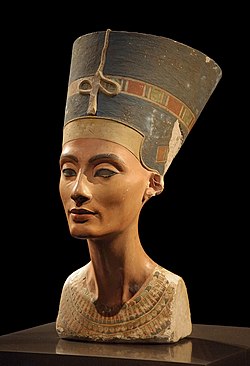
The first individualist who insisted on worshipping Aten when everyone else was dedicated to Amon-ra and the lesser gods. The narrow, aquiline face. Narrow shoulders and pendulous belly. But refusing to be idealized. No shapely waist and wide shoulders to depict him. Nothing but the reality would do.

Michael felt an affinity to the antique figure, a recognition of self. The face, proud and noble. No one could tell that that face, his frailty, his misshapen figure was not beautiful.

Of course, after his death, the jealous priests exhorted restless hordes to erase all evidence of his greatness, to chisel his name out of posterity.

The Brotherhood of Man is the safety of the masses, the sameness of physiognomy and predictable aspiration. There have been, and are, a handful of others and they suffer, Michael consoled himself.

*******************************************************

Studying at the university library late at night. The place almost deserted, huge and hollow sounding. He could hear his breathing almost, his heart beating like strange music filling the empty spaces of the chamber, bouncing off the books.

Michael let his mouth fondle the Chaucerian Middle-English, felt his fluid tongue quiver with the beauty of the sounds playing in his head.

The sound of something rasping. Over at the card catalogue, a lone figure pulling out a drawer, lifting it out, taking it over to a table, laying it down and bending over to riffle through the cards. A woman, small and dark, her backside rounded, pointing at him.

A warm flush suffused him and he felt himself, tumescent.

What would happen? If he silently approached, placed his hands on her hips and drew her toward him. He could feel her against him, the softness and warmth of her. He could lay his face against her hair and the freshly washed fragrance of it would cradle him ... but she turns around, angry and frightened, lifts her hand, palm open, to slap him. Calls him 'creep!'

He retreats, stumbling in his confusion, apologizing, his voice tripping over the words, agonizing.

But she's gone, doesn't hear his explanations. She's gone to the other end of the library and he watches, frozen, as she talks excitedly to a security guard. Sees as the guard turns to stare at the end of her wildly pointing finger, Michael standing there, exposed.

It hasn't happened, none of it. Michael is still sitting at the library table, still tracing the words with trembling finger on the book, and the girl has found what she was looking for, shoves the file drawer back in the cabinet. Her heels click businesslike and impatient on the floor, echoing through the silent chamber as she walks off.

******************************************************

"I'm the first one in my family to break away from the duenna-mold. I'm the oldest. It'll be easier for my sisters."

"But there's something nice about that, too. It means they care about you, doesn't it?"

"Yes, they do. But you've got to understand, it's all done to protect the girl's reputation. If they suspect she's done something wrong, she isn't worth anything on the marriage market."

"Oh."

He likes her, her casual acceptance of him. Her fragile height, and her black cap of hair. Her defiance of old-world custom while still maintaining about herself an old-fashioned rectitude. Ramona.

"Tell me something else, Michael - it's fascinating."
"Okay well ... marmalade! Know where that comes from?"
"No."

"When Elizabeth had Mary in the Tower, one of the warders felt sorry for Mary. He cooked up some slivered oranges and sugar and took them to her, saying 'for poor Mary-my-Lady'".

Michael reads to Ramona from his original Beowulfian text, his voice a Teutonic sing-song, masculine and controlled. the Old English mellifluous and soaring. He feels himself transported, exhilarated, as much by the perfection of his sly transpositions - Essex to Kent to the more common Wessex dialect - as by the rapt expression of respect on her face.

Next time, he promises, he'll render the original texts of Averroes, Avicenna and Halevi. She hangs on his words, sees him as he is meant to be seen, as he sees himself.

Of course she can't understand what the rare words mean, but she understands well enough what they are meant to convey. They are a consecration, a sacrament. Michael's love song to her.

At a Byward Market store, he found a shawm. Oh, not the real thing, but a folk instrument, made in mainland China. Only a few dollars, and he was delighted to have it. Taught himself, slowly and painstakingly, the fingering. Learned to soak the reed beforehand, and to blow up his cheeks to force wind through the narrow aperture.

The sound was harsh, demanding, like a wounded bird. It was perfect. He could play medieval music on it. He could read his Middle English and then play the appropriate music; recreate for himself a more admirable time in history.

He haunted the Medieval and Renaissance sections of Treble Clef, waiting for any new materials that came in. He learned the musical conventions of the time both by reading its literature and by listening to the recordings of early music groups.

He'd try, when he saw someone else looking for such esoteric music, to break ice.

"Let me know, will you, if you come across something by Musica Antiqua of Amsterdam?"
"I'm looking for the Academy of Ancient Music of London, myself."
"Play anything?"
"Yes, rauschpfiffe and recorder. You?'
"Ah ... shawm, and I'm looking for a krumhorn."
"Hey, great! You play with anyone?"

But he'd always spoil things, somehow. His enthusiasm, perhaps, and the accompanying physical signs. His bobbing head that withdrew into his neck sitting on his hunched shoulders; the twitching left eye, made him resemble a nervous turtle. If they were too well-bred to laugh outright, they'd walk away coldly.

In his desperation to redeem himself, he'd spout gratuitous information after them. That the sackbutt was the forerunner of the trombone, and the curtal was the forerunner of the bassoon, the shawm that of the rauschpfiffe. No one really cared. No one came back, impressed.

****************************************************

"Michael, everyone has headaches!"
"Not like this, mother, surely not like this? I didn't always have them."
"There's always something the matter with you! If it isn't your back, your feet, your eyes, it's something else!"
"I can't help it, it's not my fault."
"Not my fault either, but it's time you learned to put up with your ... uneven health. And for god's sake, don't complain when your father's around, you know how mad he gets."

At last the headaches went. After suffering them eight long years and no one believing him. The Ottawa ophthalmologist discovered what was wrong, told him that what the other eye doctors had been doing was treating each eye individually, forgetting that they had to mesh for clear vision and the new lenses would correct the right eye that always seemed to be looking straight down at the ground.

With the new lenses, he had to learn distances and perspective all over again. Peoples' noses now leaped out at him, the ground was further away than it had always been. The result was that he seemed more awkward than ever during the period of adjustment. It was like discovering a new dimension and he thought he knew how the 14th-Century Florentine artists must have been stimulated, delighted and frustrated by their attempts to come to grips with the new reality.

Temporarily, he became again a figure of mild ridicule as he stumbled, learning to re-align images.

****************************************************

Mr. Seguin has worked for the Merchant Marine Branch of the Records Division of Transport Canada in Ottawa for thirty years. He's an ugly, fat little man, with an engaging manner, and he knows how to handle people. Mr. Seguin has recognized in Michael someone with whom he can discuss opera.

Every holiday Mr. Seguin and his son go to Rome or New York for the opera season and Mr. Seguin goes backstage to personally greet, like old friends, international opera stars with whom he has become acquainted over the years.

"Don't tell me, let me guess", Mr. Seguin says, sniffing the air, eyes shut, "that's a Cape Breton ... not a Lunenburg odour."

How does he do it? He's usually right, although one fish smell seems the same as another to Michael. The men step off the elevator, clothes reeking of their livelihood, to renew their merchant-marine licenses. They're sometimes pugnacious, shy, or resentful, and Mr. Seguin jokes with them, putting them at their ease in the cold atmosphere of the government office.

"You're doing fine, just fine Michael", Mr. Seguin encourages him. "There's a CR-3 in your future."

Michael nods his appreciation, doesn't tell Mr. Seguin that it isn't this kind of security he's looking for, but his Aten.

**********************************************************

The Maggiores are a big family, close-knit and volatile, Ramona tells him, warning him.

When Michael comes by to share their Christmas dinner by invitation, he's introduced and later can't remember - Vittorio, Vincente, Aldo, Mario, Anna, Rosa, Clarissa, Maria - which names belong to which faces. Ramona smiles empathy.

They're voluble and excitable, a throng of flailing arms and legs - rising voices - rushing over to hug each newcomer. And they're also sympatico and courtly in a now-forgotten way.

Dinner is seven courses of fish. Dinner takes four hours as each dish is savoured, wine is had with each, then a half-hour interval, while everyone talks, and the next course is served.

Michael ate the eel boiled in the eelskin, thought it was bland. And one other fish, whatever it was, a herring of some sort, that he couldn't eat for the bones. All the other courses were a blur of tastes and exhortations - "take - take!"

After, when everyone rose from the table, he made his way to the opposite end, where Ramona sat with all the other women.

"No", she whispered urgently, colouring. "You've got to stay with the men."

He experienced some difficulty following the Sicilian dialect. They spoke so rapidly - of soccer, cars and politics.

*******************************************************

"Isn't it hard?" Ramona asks him, "working all week and then coming out to evening classes?"
"Need is the mother of necessity", he quips, feeling strangely naked.
"I mean, what's the point if you've got a job anyway?"
"I've got a goal."
"What?"
"I want to teach speech therapy."
"Why? Why that?"
"Because ... because they said I'd never speak. Because everyone laughed at me when I stuttered and fumbled my speech."
"Michael ... you don't, anymore!"
"No, I don't. And it's because ..." He broke into a melange of tongues. Meaningless to her, the kaleidoscope of languages. She could see that he was teasing her, speaking musically, lightly, humorously.

"I've almost got my B.A. I need my M.A. and then I'm set", he tells her. She nods. She has an immense respect for his determination. His facility impresses her.

********************************************************

Michael's had two wisdom teeth surgically removed. They were impacted. Although they hadn't bothered him yet, his dentist said they should come out before they caused serious trouble.

He's in his new quarters. The room's larger than his old one, the bathroom not as far down the hall. Nice, except that the refrigerator doesn't work properly and isn't big enough to accommodate everyone on the floor.

He's sorry he left his old place with such bad feelings on both sides. But he hadn't made as much noise with his music as they said he had. Not nearly as much as the kids playing their damn rock.

His closest neighbour, the man next door, is from Nigeria, black as the Queen of Sheba. His name is Abo, and he grins whenever he sees Michael, and ducks his head from that great height, in acknowledgment.

Abo is always carrying books and keeps his portion of the refrigerator stocked with exotic-looking foods. Since the fridge doesn't work well, they quickly go bad and stink up all the other food, but Michael doesn't want to say anything. He likes the white-on-black greetings.

Once, Michael saw Abo hurrying along Market Street holding a live fowl under his arm, and wondered what the black man was intending to do with it.

Now, he feels feverish, and turns in his bed, annoyed that he doesn't feel like studying. She'd said ....

*********************************************************

"I told them I'd be studying late at the university, she says, bringing the fragrance of an afternoon snowstorm with her, lightening his room.

"How do you feel?"
"Dreadful", he groans.
"Poor boy."
"Absolutely awful."
"Oh, Michael!"

How could she like him? Want to be with him? She's touchy about her height, thinks she's a dwarf, but she's perfect.

"Ramona ..."
"Michael?"
"Ramona, have you ever heard of Nefertiti?"
"The Egyptian queen?"
"Yes."
"That's all I know, that she was an Egyptian queen", she says, sliding out of her skirt, her slip, raising her sweater over her head.

Wednesday, July 30, 2025

Early Harvest


The sun edges through
clouds gleaming like
a silver dollar
as we dip our paddles
fluming runnels in the lake
rippling pearl sounds
and all around the water
reflects dark clouds.

There looses a crow's
dark taunt and a pair
rise like sooty rags
off the tops of the pines
circling this lake.

The lake silvers
in our wake on this
wind-blathering day
shoving our backs
so the canoe darts
sleek as an otter
to a rock-littered inlet

where we beach. As
we poke slanted branches
the soil yields garlic
and the air blossoms
with its garish fragrance.
Wild strawberries hide

their insufficiency under
weeds as we greedily pick
for late afternoon jam.
Gulls screech, riding crests
and updrafts as whitecaps
scatter the lake.

The clean feather-edge
of swallows slice
the storm-filled air
picking off insects
that skim our
unresisting skin.


Tuesday, July 29, 2025

Moving With The Times


When Dr. Trumble came over they said it was killer gas. He'd heard about it, but never come across it before. The dome, the dome they said, caused it. Not enough ventilation. Nitrous oxides, they said. Never heard of that before. Never heard of anything like that happening before. Hadn't wanted that goddamn dome in the first place.

He felt himself hot all over. Again. Hot, then cold. Like what shock was supposed to be. Those tranquilizers were useless.

And by God, he couldn't sit there anymore. He looked again at his wife. Oblivious to his presence. She didn't need him. There was nothing he could do for her anyway, now.

He wandered aimlessly, tracing, re-tracing his steps; a courtly dance around the farmyard. Quiet now, the poultry in their roosts for the night. The occasional sound from a bird in the trees. The last swallow had long since swooped in under the barn eaves; the pigeons in the loft long since settled.

Getting dark early. Shortening the working day. Farmers don't like short work days. The way things were going here, it soon wouldn't matter. Dark or not. No farms left.

When he'd been a young man, just taken over the farm from his father, everyone called him 'Big John'. He was still tall, his shoulders wide, but hiding their width now, the blades contracted. His hair still thick, a shock of unruly grey.

He ambled down the worn path, past the barn in the direction of the river. The river swollen now, the old bridge long washed out in the last big storm. At the other end of the farm the smaller bridge was still up. Odd how the waters had taken the larger structure and spared the flimsier one. A moral there?

He wondered if it was true, that when death is near, a lifetime is recalled. Relived in the space left between recalling and the last breath. Death had ignored him, flimsy as his life had become and taken instead healthy specimens.

What could he have done to alter the final outcome? They say, people who say they know, that one thing naturally falls on another. That if you disturb one iota of how things are meant to be, the future, then everything else changes. The direction of life.

Rubbish.

But he hadn't meant to have Clara. What if it had been Harriett, what then?

Clara. she used to complain to her dad, old Martin, about how this nervy kid, John Markham, pulled her hair at school. He hadn't done it because he was interested in her, but because he disliked her. He thought he was annoying her. The thought made him feel good. She, it later transpired, felt it was his way of expressing his interest.

When they were older he ignored her totally. So she began running after him. Run after him even when it was obvious to everyone it was Harriet he wanted. He used to go by the Olsen place as often as he could, running errands for his mother. Harriet with her long blond hair, soft as fleece. Her wide smile, the crooked front teeth that made him catch his breath. Something about her. Harriet long gone. Not dead, but living somewhere out West.

No one was surprised of course when little Emily was born a scant five months after their wedding. Not much of a scandal then, anyhow. It happened, happened to most of the young people. Only thing was, it was love or at least a mutual dependence that brought most of them together to begin with.

With him, it had been raw need. His flesh searing him with the savagery of his need. And she was there. Always hanging around. Pretty, yes. And smart too. but a biting tongue and her eyes were cunning, not soft, the way he thought a woman's eyes should be.

Only women were popularly supposed to be endowed with intuition. To hear his mother talk, anyway. But he'd always had a nagging thought of his mistake in succumbing to her. And the years had been scarred by her nagging tongue.

But, he thought, sitting stiffly beside the river; the water taking on a dark blue cast, rippling darkly, nudging the banked sides with gentle slapping slurps of sound soothing his aching head; they'd had Emily, and then the boys.

"Daddy, Daddy! make them stop, Daddy!" Emily upset the first time she'd seen the field cleared to the stand in the middle, heard the terrified squeals of gophers, rabbits, caught.

"Emily, that's life on a farm", he'd said, cradling the damp child in his arms. "They get into the grain. The groundhog holes cripple the cattle, the horses."

She'd tried to understand, lifted her sweet face to his, kissed him wetly.

The next year she'd beaten the stalks, refusing to let them move in with the binder until she was sure all the animals had escaped.

It was all Tim Barker could do, to keep the others from going after the little buggers, they were so used to it. Harvest-time sport. They wouldn't though, with her standing there. Amazon queen. Determined to save the animals. The pests.

Now Emily older than her own mother had been back then. Living with her husband, her boys, in Toronto. When they come in the summer, in the fall, to visit, they're city boys. Don't know any better than to walk behind the binder, spitting out sheaves of wheat, oats, unshirted. Then complain about getting scratched. Hands stung raw from the binder twine, stooking the sheaves. Chests all scratched and red. Then pitching hay the same way. Chaff sticking all over them, and they'd be scratching in a frenzy. Never learn, city kids. But game. Don't complain all that much. And laugh a lot.

Excited, he liked that. Excited about being in the country.

"A dark brown animal, not too big, Gran'pa. Sleek, dripping wet!"
"That'd be a muskrat, Brian."
"Yeah? Hey! A muskrat?"

"Yep. They live in a burrow or a mess of sticks in the bank of a river. You be quiet, lay there on your stomach by the bank, you'll see him dive in the water, swim around. Busy little creatures."

"Hey, cool"

"Turtles too. And snakes ... garter, for the most part." Saying that quickly, because of the reaction. Agitated. He wanting to impress the boys. Have them like the farm. Want to have them come back.

"Snakes, ugh!" Coldly, revulsed. "I like the muskrat better."

Clara muttering at him. Nattering at them to keep their city clothes neat and clean. To stay off the field. Hell, they learned quick enough to sidestep cowpies. Even learned to get up early and gather eggs for their grandmother. Not that she wanted them to. She thought they should act the little gentlemen. Country farmers. Her ideal was to sit around in nice clothes, hire people to do the work.

Tried to persuade him too, years ago. Wanted a place like the Mortons, two farms over. Registered Holsteins. An electrical set-up. That house they had really got her going. She hated theirs. Said it was clumsy. She hated the wood trim, the second-story doors leading outside, leading nowhere. He'd offered to build her a balcony so she could use the doors. She'd snarled, said he didn't understand. True, he hadn't. It was nice, all that stuff she liked. Nice, but you had to have the money.

"We could get a loan!"
"I won't borrow what I don't need! Time enough when I really need the money!"
"God! You're stubborn. With that attitude we'll never get ahead!"

"We're doing fine." His voice calm. Deliberately calm. Hers high-pitched, hysterical. His quiet replies infuriated her. He knew it.

"You're doing just what your father before you did. He learned it from his father. It's called marginal farming!" She spat the words out like a curse.

"Nope, it isn't. We're getting on well."

She snorting. Incoherent with frustration.
"We've got money to spare. Some, anyway, Clara. What is it you're lacking?

No use of course. It was city life she lacked. Second best would be the genteel kind of farming operation she envied. Which he wouldn't be part of. Even if he could. He wouldn't give up the feel of the earth crumbling under his fingers. Why had she pursued him if she'd wanted the city anyhow? A question she never addressed a reply to. But that was all long gone, past. Just that everything was coming back now. Bile in his throat.

For his thirteenth birthday Little John wanted a .22 rifle. Got it for him. Taught him the safety and use of the thing though he'd never had any use for guns himself. Had enough trouble with the nuisance of hunters in the fall.

Lost a good cow once, mistaken for God-knew-what. Found her in the hardwood bush. Stinking, bloated, rump cut through. The hunter, he'd supposed, had wanted something for his trouble.

Hunting on his land. Once, he'd thrown a couple of hunters off and they'd left, mad. But he'd known they would double back and come in again the other side of his bush. A seasonal nuisance. Posting signs was no help. They were there, at it again. Just yesterday heard the crack of a rifle. Trying maybe, for the ducks. Good thing his Pekins stayed around home.

But there was Little John with that rifle. Excited and full of plans for getting rid of all the gophers and a fox that had been into the chickens.

Turned out his first bag had been a robin. The bird just sitting on a fence and Johnny trained the sight on it.

Probably didn't think he'd hit it. Just fooling around. When he'd come out of the drive-shed, there he was. Sitting vacant-eyed, looking down at the pathetic shape in his lap. Just looking at it, fascinated with the power he'd wielded. The gun, discarded, thrown on the dirt and left there. Later, he'd picked it up himself, taken it back up to the house, cleaned and oiled it, put it away. Johnny wouldn't even look at it.

"How about I take it, Dad?"
"Soon enough, Robert. You're too young yet."
"Next year?"
"We'll see, Son. Now, how about you go down and mix up the mash for the pigs, eh?"
"Next year, Dad! Next year I'll get the gun and I'm gonna be a great shot! I'll practise on tin cans, eh Dad?"

Tin cans, sure. And groundhogs. A porcupine once. Then later, graduated to game birds. Johnny was the only one who refused to eat them. Emily, by then older, was more practical and she displayed a gourmand's tastes; enjoyed the quail, the partridge.

Even when the kitchen was all fixed up. Professionally. She wouldn't let him do it. Oak cupboards. The old ones ripped out. A double sink. New tile floor. New stove and refrigerator. He still disliked them. But even then she wasn't happy. The idea struck her to spend winter in Toronto, when the kids were older. Said the schools in the area weren't good enough for her kids.

They were his kids too. But he let them go. Robert and Emily adjusted well, even though Emily and Clara always argued. Johnny left one day, hitchhiked back to the farm.

"You need me here, Dad!" Face concentrated in its earnestness, trying to persuade him. He hadn't needed persuading.

"I'll do the cooking, okay, Dad?"

Caught him out, the kid had. Betty Swimmings, he'd hired her on to look after the house, do the cooking for him and Tim Barker. Tim had taken one of the boys' rooms, Betty the other. He'd had to let her go. Felt guilty anyway, about Tim and him taking turns, visiting that bedroom. After all. The room belonged to one of his boys. It seemed somehow wrong.

So Johnny cooked for them. At first nothing but fried chips and pork. But he learned well, and quickly. Turned out a better cook than his mother. Except for the bread. Bread and pastries, he couldn't manage them. But that was all right.

They made out fine, the three of them. It was easier than when he'd been a kid. Everything done by hand, then.

Everything done the hard way. The worst thing was shovelling manure out of the barn, sweat runnelling down his face, his clothing reeking. He and his brother riding the big Clydesdale bareback. Old Emma. Her habit of backfiring.

He fingered the scar running a patch of white skin through his left cheek. He and Gary fighting. Himself getting the better of it until Gary got mean, swung a pitchfork. Hot, searing, the flash of pain lightning across his cheek.

Once, he reflected, he'd known the name of every farmer in the area. Half of them had sold out now. Parcelled off the land. Country houses on decent acreage springing up over the countryside. Fewer fields being tilled every year. And the Conservation Authority buying up land. Developing it for the Province. Recreational facilities taking the place of good farmland. A damn sorry sight. Clara thought they had an offer he couldn't refuse, had nagged him the past month on it.

"You're crazy! You goddamn idiot!"
"It's my land."
"We could have the money! Live in the city!"
"You do live in the city, half the year. What more do you want?"
"You're getting old. Your heart's bad. How long do you think you're going to keep the farm?"
"Until Johnny's ready to take it."
"He won't!"
"Sure he will. He just has to make up his mind."
"Open your eyes, for godsake! None of the young people are staying anymore. Where's the money, the future, in it?

Money was always the big thing with her. Not just to have enough to keep going, be comfortable. Money though, to spend, bank.

For a while he'd tried. thought of developing some of the wooded land behind the back pasturage himself, right in a stand of cedar. Himself and a friend, working spare hours constructing tight little cabins. To rent out to city people. Right beside the turn in the river, where the land was prettiest. Good fishing too. Speckled trout. Cedar shingles. Plenty of white paint and green trim. They weren't fancy, but nice, nice and solid. Advertising had brought a few families out. But after the first few years he'd found them a damn nuisance, decided to stop renting.

Strange how buildings just sort of melted back into the landscape when they weren't used. The kids used them for a while, to play in. Then the birds took over, and the insects, and he didn't see any point using a lot of time and labour, not to mention materials, to keep them in shape. The underbrush drew right up to them, the trees overgrowing the cottages and now, if you didn't know just where to look for them, you could walk right by. Like the places in South America that he'd read about in National Geographic. Abandoned cities built of stone by ancient civilizations. The jungle growing right over everything. Tree roots standing straight in the middle of a building.

God, it was a wonderful farm, his. Three hundred and fifty acres. A fine hard-wood bush, rolling fields. Sturdy old buildings and an arm of the Little Humber intersecting the farm. What more could any man ask?

A crow flew overhead harshly cawing, bringing him closer to the present. He pushed himself up off the bank. Then walked slowly back up the hill, his rolling farmland gentling the landscape in deep shadows.

He stopped at the railroad tracks, smelled the creosote on the ties. Some of them just recently replaced by work crews. Used to worry about the kids, with that train coming through regularly twice a day, every day. Never had enough pennies around to satisfy them, either. Those elongated pennies made them the most popular kids in the school. Giving them out to all their friends. They'd pick them up still hot, vie to see whose were flattest.

Past the tracks, and there was his barn. Huge. Old, even when his Granddad worked the farm. Stone foundation banked on one side. On the other the large drive shed. To the left the hen house, where during the day his chickens wandered aimlessly about, scratching the dirt. Banties too. He'd thought once to breed them for show. Never had the time, but they were nice little things, brightened the yard. His layers, Rhode Island Reds and Longhorns; Barred Rock Capons for meat. Remembered how, as a kid, he'd arm himself with a stick when he carried the empty baskets down in the mornings.

Wicked, his mother called it, when she found out. "Johnny" her voice echoed, "don't you know, you fool child, hens won't lay if you abuse them!"

"What about me?" he whined. "They peck hard, Ma!" Snuffling. "They don't like me, is all!"

Off in the distance he could see his cattle. Dark smudges on a shadowy background. Smaller herd than he used to keep. Mixed breeds. Steers.

There was a sharp nip in the air. Clouds scuttled the sky; stars not yet pricking the sky. The deciduous trees now past their colour. Most of the leaves gone.

Not just the leaves gone, though, Purpose too, was gone. What comes of changing things without knowing what you're doing. Progress. Hand in hand with ignorance. Fool around long enough, upset the balance, things go wrong. Johnny himself, he was the one that thought the big silo should be covered.

"A dome, Dad, that's what we need!"
"Never needed one before. Why now?"
"Gotta move with the times, Dad. You've always complained about the corn getting drenched. This'll solve the problem."
"I don't know. It's expensive too, eh?"

Couldn't refuse that boy anything. Boy! A man, thirty-two. So they'd contracted to get that metal dome top put on. Looked good, a shining gunmetal blue. Sileage, Johnny said, would be high and dry.

Blowing the sileage in the big one, the one with the dome, just as usual. A little later than usual getting the corn in. They'd had a lot of rain. Couldn't get the tractor out to the fields. Thought maybe they'd lose half the corn to rot. But then the weather turned and there they were, filling the silo. Robert coming out to help, taking time off from his job.

Robert gone up the ladder, into the silo. Levelling the sileage at the forty-foot height. Tim Barker, on top the ladder, directing the flow from the chute. First indication something was wrong, when Tim shouted something down at them, the wind taking the words away, scattering them so they only heard - "Robert ... down ..."

Then, nothing. He and Johnny were at the diesel tractor. It had slowed down, the fan stopped venting. Fooled around with it, discovered it was out of fuel. Careless. Still didn't realize there was anything wrong. Wondered suddenly about the quiet, up there.

Johnny climbing the ladder. Yelling something from up top, then going over into the silo. Then nothing. Himself left there, shouting. Couldn't manage the ladder himself, anymore. Yelled for Blair Barker, working over in the barn. He wouldn't go up.

"You bastard! You little bastard! Your father's up there, too! If I could myself, I wouldn't ask you!"

And then, soon after, Clara's eyes like lethal weapons. At first. Later, hollow. Empty.

They sat unspeaking in the parlour, three covered mounds keeping company with them in its immaculate, company-ready state. No one could ever say Clara wasn't house proud. Clever with her hands. Fingers always flying, crocheting those little doily things that covered the surface of every piece of furniture in the room.

It seemed the thing to do somehow, sit there. He'd realized in an abstract way that they were both not quite there, but they'd turned away offers from the Coopers next door to stay with them. Clara had refused to let Millie Cooper comfort her, had pushed the other woman's intent, her encircling compassionate arms away with a flare of passion that had taken the other by surprise. Embarrassed him; the woman meant well.

She sat for once, aphasic. This one time not embroidering his air with mean observations. With her translation of his attempts to foil her wants. How long, he'd wondered, would the catatonia last?

He looked straight at her, observed her sunken flesh, the melting curves that had once enraptured him long vanished into hidden pockets of bone and gristle, evaporating it seemed, in direct proportion to the growth of her spite. And it surprised him somewhat to look this way directly at her. To see how heavily the years sat on her. He wondered when he'd last really looked, for it had long become habit to slide his eyes past her, to fix them on a spot directly above and beyond her own, the void distancing him from her presence, giving him the illusion that she was a nightmare he had to endure, would soon wake from.

A miserable way to live a long life, he now thought sadly. Sad because, instead of the implacable rage he expected to find on her face, there was instead a vulnerable puzzlement and her weakness in their lifelong battle sent a stab of regret through him.

Fault, if it could be designated fairly, he finally admitted, probably existed on both sides.

And he recalled the unexpected heat of her passion, taking him aback at first, rendering him impotent for fear of not living up to her expectations. Then delighting him as he wallowed in it. But that was before their marriage. When she continued to meet his passion with her own after their marriage, even after the kids were born, even while during the day she battled him, he found it repugnant, began to withdraw precipitously, imperative shrivelled in distaste at the thought of her. Gradually a pattern emerged of his own hasty entrance and quick exit. And he knew she was frustrated, took his pleasure in that. Now how long had it been since they'd shared a bed? He'd fought her on a battlefield of lust and won each battle. And the war raged on and this was the culmination; a stalemate of bitterness. And now this emptiness depriving them both of the compassion they needed, to give each other succour in this time of direst need.

"Clara?" he ventured, leaned forward, shifted, lay his hand on the plaided material of her dress. No response. Nothing flickered in those eyes that blazed so readily. It was the sedation. The doctor had tried to get her upstairs, put her to bed, but she'd resisted, insisted on sitting there. He'd finally shooed them all out, said he'd stay with her, was fine himself.

Last week, wasn't it? she'd laughed at him, said contemptuously - what had brought it on he couldn't remember - "he's just going along with you for the time being. It's temporary. He won't spend his life on the farm, like you think."

"Who?" Momentarily confused. wondering later why he'd let himself fall into her trap, given her the satisfaction. "Who, Robert?"

"John!" she said triumphantly. "You know you haven't got Robert anyway. John, that's who!" She brushed aside his snort of derision at her conviction, went on: "You've burdened them both with a lifetime of guilt; sensitive to your enthusiasms, your crazy determination to keep the farm when it's not worth the dirt you stand on. With your dependence on them. And they're afraid to tell you they won't stay, aren't even interested. Afraid to hurt you. Though God knows, I don't know why!"

He'd waved aside her words, irked. Made to leave the kitchen but her words followed him out to the summer kitchen, out the shed door, down the path. "You think Kathleen'll be willing to be a farm wife? Soon as the wedding's over he'll bow out. He's just staying around long enough to try to get you on your feet. Introduce you to modern farming techniques. Once he pays off that new silo installation ... "

Expecting her voice to fade, but she'd followed him, stood in the doorway, shouting at him descending the hill to the barn. "You'll never live to see him take over the farm! Might as well sell it to Tim Barker like he's been asking you. It's his sons who're farmers. Not yours!"

All in the past. Yesterday and yesterday and yesterday. He'd been ready to give up the farm. Same age as his father before him, when he took over. Ready to sign the farm over to Johnny.

Nothing now. Clara sitting up there, alone. With her sons. His sons, too. With the past and all the mistakes they both had made.

Now it was time, almost time. He re-traced his steps, shuffling leaves, their acrid odour bringing back other autumns, his own boyhood. What a pity, what a waste. But still, it was time for him to retire. Nothing would change that, now.

It was the first time since the tracks were laid, since the run began, that No.5251 stopped in its evening run inside the confines of the Markham farm. It had taken about a quarter of a mile for the engineer to finally effect a shuddering, anguished stop at 7:10, right on the dot.


Monday, July 28, 2025

Past Patterns


In the hazy twilight
of a yawning future
one contemplates
the past
mines memories
for precious elements
of events
to prove that
something significant
did occur.  We turn
these shadowy relics
of coddled treasures
.... carefully
to catch the gleam
of emotion
dimly recalled;
the recollection
poignant and somehow
magnifying whatever the eye
of the mind rests upon
giving it significance
beyond time's
expiration
as we expose
first this
..... then
another facet to the
light of need
proving once again
that patterns
illuminating
.... the past
colour the present.


Sunday, July 27, 2025

Enter Ye


Be Not Afraid

Step you forward, Stranger. Why look you so, upon me? Ah yes, curiosity is a strange, unquenchable thirst, is it not? Doubtless you've heard ... strange stories. Approach: Have no fear I will do you naught. There: Look you to your fullest .... Ah, you do not shrink back. Be at your ease, Stranger. I see many questions hovering on the lips of your curiosity, still unsatisfied. You have but to ask, it shall be my pleasure to deliver you of the pricklesome burden, this quest which has taken you to these far corners. Exactly ... seat yourself. Be comforted in my presence. ...And, you are named? Aenid? Know then, Aenid, you who have come so far, that I do herewith grant to you the freedom to ask what you will. such a journey as yours should have its reward.

I am She, Rheeta. There is none other of that name extant. The name is the Sign; she who bears it bears also the burden of the Sisterhood. Although my time will come as surely as it has done my predecessors, there will always be another and yet, another, Rheeta. This, that you see engraved, etched and lovingly portrayed upon my countenance is the past. Upon my visage is the past always present. The shades of carmine are the hues of carnage. That which was once visited upon this Sisterhood.

Your own face, lovely Aenid, wrinkles in dismay. I speak in riddles, you say. Such has always been the wont of the Motherhood of which I am the Superior. This archaic tongue is our sacred language. I shall, however, forsake it for the sake of your complete understanding. For it is meet that you do understand, you whose presence has a meaning and an urgency beyond your ken. Do you hark unto me, Aenid....

This is now, on the surface at any rate, a peaceful country. Did you see unrest or indication of any kind of material want on your way here? No, you would not. Did you stop at one of our ale-houses ringing the common? Ah, you did. Well, these are our meeting places; where the men of the Keep and the women of the Sisterhood mingle. In public those, our ale-houses, are the sole places which permit social interchange.

It is there, in these places which serve both our people, that the two solitudes meet, become personally aware of one another on more than an abstract level of the separation imposed upon us by sad history ... and where, if like minds meet, representations can be made toward future joinings. I still speak in riddles? Why is there that separation? And what do I mean by 'joinings'? Yes, of course, it is history, background which is needed to introduce you to our culture.

You come from Beyond, there where, as the Lore tells us, the cataclysms that shook this portion of the world had little effect. Your world, and your people, were thought millennia ago to have evolved later and separately from this place. And so, the level of your civilization was held back; you were thought by the ancients to be what they termed a 'stone-age culture'; that is, without advanced technical support-systems. These words, you must understand, are as a litany. I do know what they mean, but I cannot envisage exactly what advanced technology was, so long ago - other than what the Lore vaguely permits us to know. Some things - many things - are known only to the priestly caste. It is they who interpret the Lore and it is they who decide how much we should know and what to withhold from us.

Suffice it to say that when our segment of this world went into swift - and many thought - irremediable decline, yours was miraculously unscathed ... and so you continued in your own leisurely fashion to evolve. We have actually very little curiosity of the places which exist beyond our borders. We pay obeisance - as we must - to the priesthood for they are the Keepers of the Lore ... and we assist the Keep to pay tribute to the Overlords for they are the Keepers of the Peace. Both, the Lore and peace, are essential to our continued existence. We have been threatened in the past, on many occasions, by the attempted incursions of outside aliens.

The attempted invasions have been sparked both by a lust for our women whose beauty and industry is well known and for the plentiful gems which the men of the Keep mine and use as barter and Tribute. These gems cannot be found elsewhere. It has been said variously that these lands were once rained upon by a burst of heavenly bodies colliding, showering our mountains and plains with the bounty which has since named this place Feldspar ... and it has also been rumoured that the gems occurred through some strange alchemy of destruction brought about by the awesome weaponry which once great powers used in their ways, one against the another.

It is true that we are the remnants of a once-powerful and proud nation. The Lore tells us that great multitudes lived in these lands once; their numbers were legion and they had evolved a way of living that was much unlike ours. In many ways it is even now difficult for us to live together in harmony. So that I can almost imagine how difficult it must have been for so many people as were reputed to have lived then, to agree with one another and respect each other.

And as the Lore would have it, there came a time when agreement and respect evaporated and in their place reigned fear and hatred and an unreasoning wish for revenge - for what, I cannot say. And thus was unleashed a horror that rid the earth of its inhabitants. Yes, I know it had little effect in your places, but ours were affected. Even now, in the marshes beyond the forests fencing in this land no one wishes to go. A strange phosphorescence glimmers over the waters; they assume strange shapes and we hear eerie sounds as of the weeping of multitudes.

That is the history, such as it is. What we discovered also is that the men and women could not live happily together. For some reason, after the coming-together again of those who survived, there was much bitterness. The men accused the women of goading them to war and the women accused the men of deserting them for the glories of war. This, at any rate, is what the Lore tells us.

Over a period of time, a rift ensued and a sharp division of labours came about and with it, a drifting apart of men and women. So that, eventually, we became as you see us now ... the central place and the outlying settlements. The central place is the Keep, inhabited by the Thane and his men. The settlements consist of Sisterhood villages. Over the fields are the mountains and plains which yield our famed gems. The mining and other aligned industry is the men's province. Spinning, weaving, animal husbandry and farming belong to the women. As does the care of the creches, the instruction-houses. Indeed, that separation of duties, the Lore informs, is no innovation; it has been so, from time immemorial - we have only taken it a step further with our imposition of the physical separation of male and female.

We have our problems but for the most part, the arrangement is a congenial one.

We have a Council of Elders in our Sisterhood, commonly termed the Motherhood. These are comprised of women who have seen much and their counsel has stood us well in times of need. I am the titular head of the Motherhood. I stand alone, however, in never having mothered children. I am the recognized Mother of all, nonetheless. In my place, when my time comes, will be another, groomed from childhood to take her part in our history. We are one, the succession of Rheetas and as such, faceless.  This is the reason why that portion of the Lore which tells of man's brutality to women which comes about through close daily living together, is etched on my face in this vermilion dye.

It was done, that scarring, when I was past childhood and I remember nothing of the ritual. I did not go through childhood with this face, but wore a common and quite unremarkable countenance so that I could mingle with the other children and not be kept apart. In this way could I know my people and share their thoughts. Were I to have been known as one set apart, those thoughts and the freedom which comes from consorting with one's peers, would have been withheld from me.

It was with the ascension of my role, my place as Mother Superior, that that other face was removed and my identity revealed. All my predecessors, as I myself will be, were ceremoniously plowed back into the earth from whence they came; to enrich the soil and ensure the bounty of future harvests. It is our way, one which has a long and honourable tradition.

We seek to please that Ultimate Superior, whom we all faithfully serve.


Saturday, July 26, 2025

Imagine If You Will

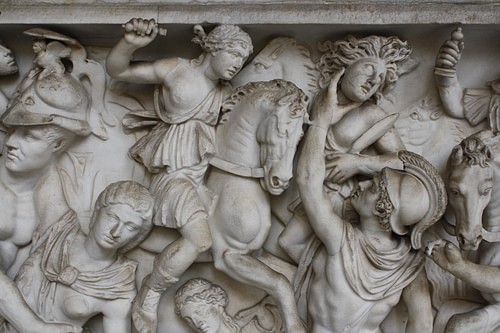
Penthesilea & Achilles

Imagine, if you will, long-limbed
women with one bared breast
riding bare-backed wild horses
(yet not as wild as the women)
lusting for battle, riding the wind
taming the wind with the speed of

a raptor, loosing their arrows,
closing in for the kill.
Myrina, Mitylene, Antiope and Hippolyte
warrior queens worshipping Artemis;
huntress, goddess. Their veins

pounding excitement for close
combat and ritualizing girlrearing
to cultivate athletics, the hunt and
scorn of man, the effete sex. Rites

of death; only a man-killer became
a vessel of new life; a tradeoff
death earning life. Imagine, why
not? Remember, in every myth
resides reality. Troy was a fable

until Schliemann's dream of discovery.
Those fabulous females were the
scourge of their time, the wonder
of an age. Even in their killing

a terrible beauty; pinning a man's
feet to the soil with unerring arrows
his hand to his shield
so the Amazon could swoop down in
triumph, a beautiful avenger, to

sever his head and hold it aloft.
Peerless in beauty, innocent in
their savagery. True, no concrete
evidence exists, only tradition in oral
tales and the writings of Diodorus

and Quintus Smyranaeus. But look,
in future ages what will prove our
existence on the forlorn landscape
of a nuclear-blasted plane?
Remember; our time will also pass.