Sunday, August 7, 2022

Brazenly Lecturing the Pope


When I was a child in an altogether earlier era 

I was impressed by a fable of a fisherman who 

caught a fish that was really an enchanted prince 

who promised the fisherman a magic wish if he 

spared his life. The fisherman said he would like 

to be an emperor and his wish was granted but he

reconsidered and said he would prefer to be the pope. 

The fish refused and withdrew his offer. I was not 

a Catholic child and wondered what the fuss was about.

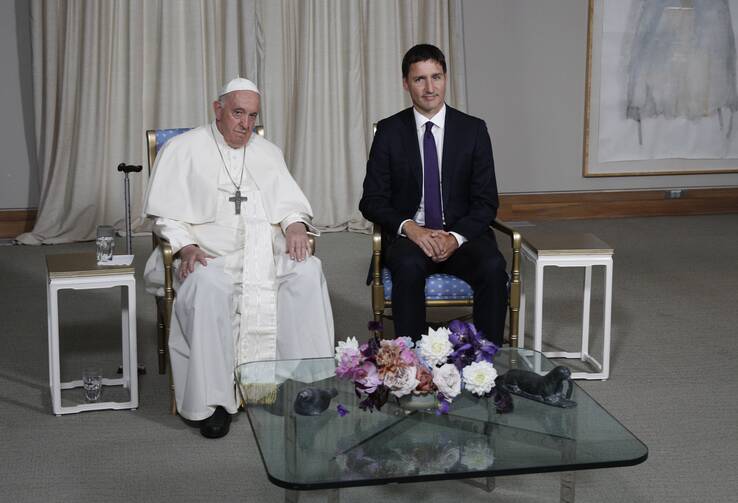
Now I know and it is clear to me that Canada's

prime minister, a none-too-devout Catholic knew

nothing of that fable. He portrays himself as the 

emperor of the country but it seems he really resents

lack of access to that higher sacred post. When the

Pope arrived in Canada on a mission it offered

the prime minister, a man of decidedly loose morals 

the opportunity to lecture the Pontiff on the most 

regrettable failings of the Church, to be rectified.


Saturday, August 6, 2022

Duty Above All


May 31st, 1884 The gale continued all day and was accompanied by a heavy snowstorm. We were not only held close prisoners in our shelter, but also in our bags, as drift over a foot deep covered us. We were unable to cook and consequently had nothing to eat during the day, not even a swallow of water. Of all the days of suffering, none can compare with this. If I knew I had another month of this existence, I would stop the engine this moment. *
He might never have been able to imagine, even in the most feverish of his dreams, that he would himself experience such desolation, fear and privation. There is nothing, he thought grimly to himself, like living through such a nightmare to bring a human perspective to the heights to which human resources might aspire, and the depths to which the human spirit could plunge. It was only through the desperate cauldron of facing death on a daily basis that each man’s strength and weaknesses surfaced, so one could finally know what lay beneath the carefully maintained and structured façade of civility that society demands of its creatures.

This was a society he was familiar with, not the kind which also existed in the world of those with scant resources, ruled by tyrants who made short shrift of human values and rights belonging to others. In his world, occasions abounded for individuals to recognize and make the best of their opportunities, and those who strove to find satisfaction in their lives thrived, while those who merged their inertia with society’s constraints remained maladapted to the vision of their very future attainments.

For him that vision encompassed adventure, glory, serving his country as an educated, astute military man gifted with certain attributes that made him the perfect selection to help lead an expedition into the frozen distances of the globe where animal life abounded despite the severity of the atmosphere, the geology and the weather, but human life could not.

So here he was, on Ellesmere Island. Two winters of it. That was the assignment. Collecting weather data, scrupulously reporting on atmospheric conditions. So his country would have a record and an understanding of conditions there to advance the science and knowledge of the geography and the hostile-to-humankind-environment. It was past time they left.

The understanding was that after the two years they would be relieved. Short of food, their equipment in a failing state. Tired of waiting. No option but to have faith, to hope for relief. Stoicism was their current lot in life. One that began slowly ebbing, as some among them became ever more disoriented, dysfunctional, minds and bodies severely malfunctioning.

It’s not easy living with that kind of cold. It is a beautiful environment. Aloof, pristine, lovely beyond belief. But even a clear day with full sun does little-to-nothing to alleviate the dread cold. The men are tired, underfed, on the verge of starvation, ailing and desperate. Some of them lie in their virtually warmth-useless sleeping bags, refusing to rise. Preferring to invite death through surrender of their imprinted imperative to survive. They have admitted to themselves that they are incapable of flailing against imminent death.

They are, however, my responsibility, he sternly reminded himself, and one I do not take lightly. I go out every day and do what I can to obtain some element of nutrition to help keep us all alive and hoping for another day. I am by no means the only one to attend to these mutual duties, but it has fallen to me and me alone to gather as much shrimp as I can manage with my inadequate nets and failing store of bait, to keep death at bay.
June 1st, 1884 Breakfast consisted of three ounces of shrimp and a cup of weak tea to each man. We were without food for thirty-six hours. Lieut. Kislingbury became unconscious at 8 a.m. and breathed his last at 3 p.m. Before he lost consciousness he begged piteously for a drink of water, but this the Doctor denied him. He then sang the Doxology in a clear but weak voice and, falling back in his sleeping bag, was soon in the embrace of Death. *
We’re all progressively weaker. But some of us do our utmost to remain of good cheer in this cheerless atmosphere, despite the beauty surrounding us. Some of the men, those whose physical condition is far worse than those of us who still go out every day to find edible mosses and lichens, or shrimp as I do, say nothing, do nothing, appear to have closed down their minds.

Awake, they lie limp and unresponsive. Some have close at hand photographs of wife, children, mother. And stare at these photographs unceasingly. Occasionally mumbling names and perhaps reminiscing about happier times. They have utterly given themselves over to the prospect of never again seeing their loved ones. The visages of their wives, mothers, children, will be the last their eyes see before they glaze over in death.
June 2nd, 1884 Salor died at 3 a.m. I was lying by his side in the same bag at the time. Not having the necessary strength to remove him and not feeling inclined to get up, I went to sleep in the same bag with the remains and did not awake until breakfast was announced at 9 a.m.
Doctor Pavy was making some rather absurd prescriptions this evening and talking incoherently.

For weeks I have noticed Linn’s feet protruding from the gravel heaped over his body. Day by day the elements have reduced the scanty covering until Linn’s feet are fully exposed to the gales sweeping over Cemetery Ridge. I have often thought that I would replace that which had blown away, but my waning strength has caused me to defer this for so long that I cannot think of attempting it now. *
Each dawning day appears more beautiful than the one it succeeds. In any other circumstances, we would be transfixed with awe at the wonder of nature’s paint brush. This morning there is but little wind, a decided relief from previous days’ incessant blowing. We have had good hunting today for a change. Along with the shrimp I have managed to gather, a dovekie was shot, and it will be cooked slowly to produce a hot, nutritious soup for all of us. We reqiure something like that to restore a trifle of capacity to our failing bodies and a modicum of hope for the near future. For if we survive the near future it is entirely possible that the ship will sail through and bring us the relief all of so dearly hope for.

Some of us have been able to eat the rock lichens that have been collected, and found some nourishment in them. Others, however, suffer greatly from the after-effects of eating these unpalatable lichens.

The sound, because of lack of the usual high blustering wind storms, looks calm, smooth and wonderfully blue. A calming, restorative sight for weary eyes, tired of tearing from the cold and the wind.

It’s come to this; our medical man is so weak and dispirited we may soon lose his professional capabilities. He refuses to any longer partake of our communal shrimp stew. He will now agree only to taking weak tea and as anyone might know, most particularly a man blessed with medical knowledge, no human body is capable of surviving long without adequate - or even in our parlous state - a minuscule amount of nutriment.

We continue to realize that one among us is a predator, caring little for the common weal in our miserable situation. Lieutenant Greely, aftersome brief consultation has been forced, by unfortunate circumstances, to issue an order:
Near Cape Sabine, June 5th, 1884 To Sergeants Brainard, Fredericks and Long:
Private Henry having been repeatedly guilty of stealing the provisions of this party which is now perishing slowly by starvation, has so far been condoned and pardoned. It is, however, imperatively ordered that if this man be detected either eating food of any kind not issued him regularly, or making caches, or approaching any article of provisions, you will at once shoot him and report the matter to me. Any other course would be a fatal leniency, the man being able to overpower any two of our present force.
(signed) A.W. Greely, Lt.5th Cav.A.S.O.& Asst. Comdg.Lady Franklin Bay Ex. *
We simply have no other choice but to this grim task of sentencing one of our own to death in the hopes of securing the lives of others of us. I find, despite my assiduous attention to the tedious work of fishing for our little life-saving shrimp that they are no longer taking to the bait. My strength is steadily diminishing and I have little appetite for further strenuous attempts beyond my present state of energy-depletion.

As it is at the present, it is all I can do to muster the energy required to stagger toward the shrimping grounds, remain there for the hours required to attempt to fish out a goodly portion of what remains and then painfully pull myself back up with my catch to the camp.

My mind and thought processes are dulling. My brain appears to be refusing to work as it should. I cannot recall what I should automatically be doing in the performance of my duties. My obligations to the men partially under my command are foremost in mind, but what, precisely, I should be doing, to ameliorate their condition, is now eluding me.

This is a most unfortunate situation. I cannot quite conceive of the reason why our rescue party has been so agonizingly tardy. Surely they must realize the situation we are in? Surely they have some intuitive knowledge that our situation is parlous? Perhaps it is better that we do not torture our minds by these useless conjectures.

We must acknowledge that something disastrous may have occurred to our relief party. That, or somehow conditions leading to their being able to reach us have somehow conspired to leave us in our present state, and they in a worried consternation over our situation.
Near Cape Sabine, June 6th, 1884 Sergeants Brainard, Long and Fredericks:
Notwithstanding promises given by Private C.H. Henry yesterday he has since acknowledged to me having tampered with seal thongs, if not other food at the old camp. This pertinacity and audacity is the destruction of this party if not at once ended. Private Henry will be shot today, all care being taken to prevent his injuring anyone as his physical strength is greater than that of any two men. Decide the manner of death by two ball and one blank cartridge.
This order is imperative and absolutely necessary for any chance of life.
(signed) A.W. Greely, 1st Lt.5th Cav. A.S.O. & Asst. Comdg. L.F.B. Ex. *
This is a sad and sorry business. But duty insists it must be met. As honourably, given the circumstances, as humanly possible. No one is the better for the situation.

After the execution was accomplished, a search of the poor man’s effects revealed him to have availed himself of a pair of seal boots, a coil of seal skin thongs, various knives and other items, some of which could be rendered down to edible product, some of which could be silently chewed in his sleeping bag in the dark of night, empowering him to a greater state of bodily comfort than has been afforded the rest of us. God save his soul.

We do know, however, that his was not the only such sin among our desperately suffering men. There are others suspected of indulging in the same, or like conspiracy to obtain for themselves certain advantages toward prolonging their lives.

Had we a trifle more strength between us we could undertake to bury the most recent dead. It is not at all decent that their bodies lay there, just beyond the camp where we have managed to drag them, away from our immediate presence, frozen and silently condemning our inaction in providing them with a resting place where they may meet eternity with equanimity.
June 7th, 1884 Biederbick and Connell gathered a few lichens and a little reindeer moss. This evening we dined on a stew composed of a pair of boot soles, a handful of reindeer moss and a few rock lichens. The small quantity of shrimps which I furnish daily is sufficient only for the morning meal.
We dressed the bodies of Dr. Pavy and Bender for their graves, but were unable to bury them. *
It is simply soul-destroying to witness the swift deterioration of the men’s earlier inspirational will to live. We who are in relatively better health than those gravely ill unto death do what we can to instill a little bit of cheer by commenting about the break in the weather and the beauty of the sky and the full sun, the import of which confuses us as we derive no benefit from any of it.

But there we are, all things being relative; we can, should we wish to do so, drink in the loveliness of our surroundings in this brief respite between storms.

Scurvy is plaguing the men, and little wonder. We celebrated the birthday of one our men by permitting him - and he alone - a spoonful of rum. Spirits are normally retained for other, more medicinal purposes. It was hoped that allowing that poor man a respite from his misery by a mere taste of what in other circumstances is taken for granted and taken in abundance, will momentarily bring cheer to his fading life. And he but 32 years of age.

We have found black rock lichens stew up nicely enough. Certainly not to everyone’s taste, as the result is rather gelatinous and tasteless, but we are certain, possessed of slight nutritive qualities. Everything we can manage to recognize as possibly nutrient-rich in some manner helps. We have taken to carefully and slowly chewing bits of seal skin cut from garments. This is not possible for those with advanced scurvy, and their end, we feel is lamentably nigh.
June 12th, 1884 We had only a cup of tea for breakfast. I found a new shrimping place this morning near the tent. After several hours’ work I returned with two pounds. Our evening meal - a few boiled lichens and a cup of tea.
Connell’s face appears full and healthy, but it is only swollen. He expressed a wish to work, cook and live by himself. This request Lieut. Greely would not grant.
Gardiner died at 5 p.m. Patience and fortitude have characterized his sufferings. He clung to life with a wonderful pertinacity and only succumbed when physical weakness had crushed his will. *
I try not to think overmuch of what I cannot do much about. We fumble and stumble through the long days of agonizing descent into hopelessness. What we remain aware of, those of us still capable of some minimal functioning, is that we must not convey to the others whose state of health is extremely delicate, our own sense of descending hope. We do what we must. And we do what we can to ensure that a small glimmer of hope remains in the wounded minds of our men.

The high winds have finally resumed. Resulting in our having had to remain close to camp, rather than venture further in our everlasting search for nutriments. I have been unable, of late, to catch more than a few ounces of shrimp. I did construct a nominal net to replace those washed out by a brief but sturdy spurt of ice-melt swelling the stream, but somehow lost the shrimp caught in it. And watched, helplessly, as they washed out of the utterly useless net and made their way downstream, depriving us of even that small portion of food.

We have no more tea left to us. We must now consider utilizing some of the lichens as the stuff of tea-making. The taste of which will doubtless be unpleasant to those still anticipating our own tea of a morning.
June 17th, 1884 The sense of hunger appears to have disappeared. We eat simply to preserve life. Crumbs of bread at our winter quarter which are occasionally exposed through the melting of the snow are picked from heaps of the vilest filth and eaten with relish. Henry ate ptarmigan droppings; Bender ate caterpillars, worms, etc. Saxifrage, lichens and other vegetation together with the intestines of animals would now be luxuries. I worked several hours in the raw, chilling winds and caught little more than a pound of shrimps. *

Some things are indescribable. How to describe to an interested ear the folly of a venture to which no ending can be visualized, but which must be embarked upon to obey orders from superiors who have their own reasons for the successful completion of a venture they themselves will never have to suffer the hardships thereof? In any event, those who have never undergone the travails which we have been exposed to, can never imagine how dreadful the assault on human endurance can conceivably be. Even those who have experienced such deprivation and exceptional danger to body and soul and survived the ordeal, cannot find words adequate to paint a picture with complete verisimilitude.

Perhaps this is just as well. For if those whose spirit takes them toward exploration and the adventure of discovery, those who fall under the spell of that great white presence of the frozen north were to completely understand what lies awaiting them, why they might never venture into the enterprise of discovery. And then, perhaps, the world would be a poorer place for lack of intelligence relating to the data thereof derived.

Now, to other more intimate things. Which have been gently pushed aside in my mind, heretofore. For I now find myself in that situation where I too, must think about that which is most precious to me.

What will I say when I greet my beloved wife? I will look deep into the wells of her soft eyes and I will absorb her love for me into the wellsprings of my soul. I will feast my tired eyes on her loveliness, her familiar face and presence. I will breathe the fragrance of her hair, the aroma of her being, and fill my tired lungs with her essence. I will carefully listen to the soft, sibilant tone of her voice expressing her undying love for me. I will embrace her and hold her and tell I shall nevermore leave her.

My destiny approaches but my ultimate duty yet awaits me.

*From Six Came Back - David L. Brainard


Friday, August 5, 2022

Dauntless Spirits, Great Adventures


Those people who willingly, eagerly venture into unknown territory, geology- or weather-hostile regions of the Globe present as a puzzling anomaly in basic human psyche for Nature has genetically hard-wired us with an irresistible urgency to survive. Yet these dauntless - some might venture - deliberately heedless adventurers, seek out danger, defy fear in the intent to confront their inner daemons opposing inherited existential caution.

How many among us is willing to expose ourselves to extremes of danger, privation, disease and the vagaries of chance and happenstance? Do they value life any less than we do? Or has nature tricked them into the belief that some spiritual power, within themselves or beyond, hovers protectively over them?

What irresistible siren of compulsion calls them to their destiny? What indomitable will and iron-strength of purpose propels them to forge on in the very face of Grim Death in defiance of their biological imperative?

They embark on their search for meaning and purpose, meeting head on the capricious neutrality of their maker; Divine Nature. Some live on to marvel at their escape from the uneven contest, some write inspiring narratives of conquest and the majesty of nature; the curious needs of humankind fulfilled.

There are solemn, respectful obituaries recognizing the mortal fallibility of aspirants. And account after revelation of those consumed by their need, who wander from ascent and encounter one after another as though awaiting and inviting the inevitable, leaving mourning loved ones behind, their supra-human exploits their legacy.

This bespeaks an urge of conquest vastly dissimilar to that which took Europeans to horizon-less oceanic stretches fearful to the imagination, in search of wealth and adventure: land, natural resources and the capture of people they thought of as sub-human, in a campaign to enrich their nations by the enslavement of others, through the creation of empire-building.

Leading inevitably to wars and massive blood-letting of both indigenous peoples of those conquered and devastated lands, and competing armies of ascendancy-determined conquerors.
In these searches for discovery and adventure into the great frozen places of the Earth, there is rare intention to discover sources of material wealth, but rather perhaps for some the achievement of fame.

Onlookers, awed by the trials and tribulations facing those resolute souls who venture into those isolated, weather-hostile places wonder who, in their right minds would deliberately seek to inflict excesses of physical misery upon themselves, let alone the psychical torment involved in achieving goals that sometimes elude, sometimes succeed, only to result too often in broken spirits and occasionally death.

Mountaineers face the potential of succumbing to acute mountain sickness which can be morbid depending on the depth of their symptoms, requiring immediate descent. Retinal haemorrhage can result from prolonged high altitude exposure. Diarrhoea related to food poisoning, giardia, amoebic dysentery can be problematic.

Pole trekkers can be exposed to snow blindness, frostbite, boils, bedbugs, fleas, scabies, leaches and blisters, which at extremely low temperatures can be quite different than otherwise. Modern-day mountaineers and pole trekkers have high-tech communication devices and gear and clothing to aid them, but this was not always so.

Douglas Mawson, 1912 expedition to the Antarctic: The awful truth was a blanket of cold fear, invisible, but falling over his entire world, filling the tent, flooding his mind with the terrible, haunting fact. He was alone. All that was human in this accursed place, all that had been alive - friends and dogs - were dead and gone. Loneliness was in the vast wasted land outside in the soughing wind, in the corners of his mind, in his anguish and in the fear for this own safety. He was himself sick, famished and so weak he might collapse at any moment; and he lay stretched out on this floor of snow with the heart-rending truth pinning down his body and his mind. Mertz was dead.
What would he do? What chance had he of living? Very little, he decided. This spot was some 100 miles direct to the hut; ahead ranged the heaving wind-swept-plateau ice, the great, broadly-fractured bed of the glacier, many miles of wicked winding crevasses, and then the long grinding, backbreaking climbs up the steep slopes and ice ramparts to the escarpment near The Crater - to be in sight of Aurora Peak, to leave some record there where they might come seeking his missing party. Yet he was so emaciated that the bitten, snow-clad peak seemed a million miles away. Lennard Bickel


Apsley Cherry-Garrard, June 1911: The horror of the nineteen days it took us to travel from Cape Evans to Cape Crozier would have to be re-experienced to be appreciated; and any one would be a fool who went again: it is not possible to describe it. The weeks which followed them were comparative bliss, not because later our conditions were better - they were far worse - but because we were callous. I for one had come to that point of suffering at which I did not really care if only I could die without much pain. They talk of the heroism of the dying - they little know - it would be so easy to die, a dose of morphia, a friendly crevasse, and blissful sleep. The trouble is to go on ...
It was the darkness that did it. I don't believe minus seventy temperatures would be bad in daylight, not comparatively bad, when you could see where you were going, where you were stepping, where the sledge straps were, the cooker, the primus, the food; could see your footsteps lately trodden deep into the soft snow that you might find your way back to the rest of your load; could see the lashings of the food bags; could read a compass without striking three or four different boxes to find one dry match; could read your watch to see if the blissful moment of getting out of your bag was come without groping in the snow all about; when it would not take you five minutes to lash up the door of the tent, and five hours to get started in the morning...
But in these days we were never less than four hours from the moment when Bill cried "Time to get up" to the time when we got into our harness. It took two men to get one man into his harness, and was all they could do, for the canvas was frozen and our clothes were frozen until sometimes not even two men could bend them into the required shape.
From: The Worst Journey in the World

Viscount Milton and Walter Butler Cheadle, 1839: Masses of ice, the size of a man's fist, formed on Cheadle's beard and moustache - the only ones in the company - from the moisture of the breath freezing as it passed through the hair. The oil froze in the pipes we carried about our persons, so that it was necessary to thaw them at the fire before they could be made to draw. The hands could hardly be exposed for a moment, except when close to the fire. A bare finger laid upon iron stuck to it as if glued, from the instantaneous freezing of its moisture. The snow melted only close to the fire, which formed a trench for itself, in which it slowly sank to the level of the ground. The steam rose in clouds, and in the coldest, clearest weather, it almost shrouded the fire from view. The snow was light and powdery, and did not melt beneath the warmth of the foot, so that our moccasins were as dry on a journey as if we had walked through sawdust instead of snow. The parchment windows of our little hut were so small and opaque that we could hardly see even to eat by their light alone, and were generally obliged to have the door open; and then, although the room was very small, and the fire-place very large, a crust of ice formed over the tea in our tin cups, as we sat within a yard of the roaring fire. One effect of the cold was to give a most ravenous appetite for fat. Many a time have we eaten great lumps of lard grease - rancid tallow, used for making candles - without bread or anything to modify it.
Before sleeping, however, it was necessary to secure out of reach of the dogs not only provisions, but snow-shoes, harness, and everything with any skin or leather about it. An Indian dog will devour almost anything of animal origin, and invariably eats his own harness, or his master's snow-shoes, if left within his reach. From:
The North-West Passage by Land

Jon Krakauer, 1997: From The Balcony I descended a few hundred feet down a broad, gentle snow gully without incident, but then things began to get sketchy. The route meandered through outcroppings of broken shale blanketed with six inches of fresh snow. Negotiating the puzzling, infirm terrain demanded unceasing concentration, an all but impossible feat in my punch-drunk state.
Because the wind had erased the tracks of the climbers who'd gone down before me, I had difficulty determining the correct route. In 1993, Mike Groom's partner - Lopsang Tshering Bhutia, a skilled Himalayan climber who was a nephew of Tenzing Norgay's - had taken a wrong turn in this area and fallen to his death. Fighting to maintain a grip on reality, I started talking to myself out loud. "Keep it together, keep it together, keep it together," I chanted over and over, mantra-like. "You can't afford to fuck things up here. This is way serious. Keep it together."
I sat down to rest on a broad, sloping ledge, but after a few minutes a deafening BOOM! frightened me back to my feet. Enough new snow had accumulated that I feared a massive slab avalanche had released on the slopes above, but when I spun around to look I saw nothing. Then there was another BOOM! accompanied by a flash that momentarily lit up the sky, and I realized I was hearing the crash of thunder. From:
Into Thin Air

Hugh Brody, 1987: Do Inuit live in snow houses? Do they travel by dog team? Do they hunt seals with harpoons? Do they move about, from camp to camp, in a round of seasonal activities? Do they eat raw meat? Do they dry fish in the sun? Do they make igunaaq, "high" meat? Do they wear caribou-skin clothing? Do they speak of weather as the presence of Sila, the air spirit? Do the Dene track moose through the woods on foot? Do they use snares and deadfalls? Do they believe and follow a shamanistic spirituality? Do they think that muskrat played an important role in the creation of the earth? Do Naskapi follow the caribou herds, far inland? Do they dream their way through time? Do they travel in dreams? Do they have summer gathering grounds? Do the Cree move on to winter trapping grounds each year? Do they rely on snowshoes to move through the bush? Do they make hunting cabins each season, and lay spruce boughs as mattresses? Do they make medicines from herbs and roots? Do they use medicine power in spiritual life? Do they trap beaver under the winter ice? Do Innu prepare skins on stretcher frames and boards? Do they depend on the fur trade? Do they wear moccasins? Do they prepare dry meat each autumn as a supply of concentrated protein for the coming seasons? Are children seen as elders reborn?
A simple answer to all these questions is yes
. From: Living Arctic; Hunters of the Canadian North

Dr. Jerri Nielsen, 2001: After a few stabbing gulps of thin air I was quickly reminded that I had gained almost two miles in altitude during the three-hour flight from McMurdo. While the plateau was flat as a griddle, it was also as high as the Austrian Alps. The South Pole station rests on a nine-thousand-foot thick slab of ice soaring ninety-three hundred feet above sea level.
...The temperature on the plateau was plummeting. By now it was minus 90 F. and falling, a new record for mid-March. One night I was watching a video with a friend when we heard the most horrible booming noise.

"What's that?" I said.
He said, Oh, it's just the building settling."
It sounded more like the building collapsing. We heard more of these ungodly booms over the next few days as the ice heaved in great cracks under the Dome. People were having more trouble sleeping. Sometimes it sounded like the roof was falling in or the floor was caving or people were stamping their feet overhead. Sometimes it sounded like guns or cannons.
The ice was breaking around us everywhere. Large cracks ran from the front of the galley and then spider-webbed out to the Dome perimeters There was a foot-wide crack over the ice road and a crevasse split what was left of the skiway
. From: Icebound


Thursday, August 4, 2022

Grandma ... The Wolf!


Grandma, what an enterprising nose
you have been endowed with, sniffling
and snuffling around everyone else's
business as though it were your own;
poking relentlessly into the cloistered
privacy of others' intimacies and
hitherto unsuspected failures.

Grandma, what an amazing mouth
you have, so extraordinarily involved
in spouting opinion, analysis and
synthesizing conclusions, inexorably
leading to the restoration of global
sanity, yet there are so frustratingly
few interested listeners ....?

Cannot you be more judicious in
your interventions, in an effort to
appear more lucid, informed and practical?
Much depends, Grandma, on your
persuasive voice, for that rabid wolf
is breaking down defences
even as you desperately rail...

Grandma,what perplexingly
large eyes you have, envisioning
slights that do not exist, identifying
unintended lapses, the personal tragedy
of overlooked courtesies. Grandma,
condemn them all, for the wolf
of incivility is at the door!


Wednesday, August 3, 2022

The Ancient Tapestry of Light


Then God said, “Let there be light”; and there was light. 4 And God saw the light, that it was good; and God divided the light from the darkness. 5 God called the light Day, and the darkness He called Night.

He sat on the yellow soil comprised of sand and clay, legs folded under his torso, hands held in an imploring gesture before the deliberately heedless throng. His white dishdashah was no more stained than that of most, and his keffiye neatly arranged on his head; his grey beard as indicative of age, as their own grizzled faces. His eyes, they were different. They were not, in fact quite there. They were rheumy, running hollows, to which bottle flies were attracted, distracting him from attracting the attention of those who might give alms.

They turned away from him, despite the Q'uranic injunction to charity, for his appearance was repulsive and it shamed them also, that there were amongst them some whose need was clearly greater than theirs. And theirs was great enough.

He, caring little for their disgust, entreated them to pity and to do the will of Allah in recognizing his need. He shifted his position on the ground, vainly attempting to find comfort, and his visage took on the savage look of misery incarnate, his shapeless lips no longer forming the grimace he thought represented a smile.

Carrion-seeking birds, vultures with their red-ringed heads and long wrinkled necks thrust forward, crested the sizzling sky. Dust was everywhere, circulating in the lower atmosphere, clogging peoples' throats and nostrils, and those of their livestock. It settled, mud-yellow, on everything; the lintels of their homes, roofs, worn carpeting placed over olive, oil and water jugs. Building interiors were neatly inlaid with dust, particles of the cosmos, infinitesimally minute atoms representing everything and nothing.

Dust stifled the air of the marketplace, the plaintive voices of the women, heads carefully covered in deference to the Q'uran's injunction to female modesty, complaining about the steadily rising prices of mutton, fowl, dates, figs and grain. Risen too steeply for their liking, for their ability to pay. Mothers reached down to slap small hands that crept to the top of stalls hoping to snatch a nutmeat. Infants slung across their mothers' chests, held by stout linens, bawled in a disorder of animal and human sounds.

A hawk streaked the sky over a copse of date palms, shrilling. Wispy grey clouds, barely seen against the particulate matter crowding the canopy of the sky reflected the tattered grey of once-white garments. Glancing toward the west, squinting eyes could make out a sun-dog, portending some atmospheric change, perhaps another khamsin, perhaps a clearing of the sky to something resembling blue, inviting the overhead sun to bake the ground and burn bare feet.

In the near distance rose a curvaceously slender minaret, needling God's overheated sky. Cicadas buzzed the atmosphere. The sound of the muezzin calling the faithful to prayer rang out and resounded in the still, torrid atmosphere. The hum of the crowd became muted, faded, as all turned; the women removing themselves from male proximity, to prostrate themselves facing Mecca.

The lyrical melody of a prayer as familiar as one's beloved's face piously rose to the heavens, toward Allah's patiently demanding hearing and benign approval, as his people surrendered for the third time that day to daily prayers.

In the courtyard of the Khedive's palace, roses, peonies, lilies, Persian cornflowers, delphiniums, safflower and red poppies thrived in vivid array and brilliant colour, sending their fragrance throughout the generously measured space. Where also grew olive trees, willows, pomegranate and bitterweed. Also acacia, wild celery, dill, henna and mint.

The cooling, tinkling sound of a water fountain fetched the senses to swooning, as the water fell gracefully back into the shaped pond wherein swam golden- and silver-hued fish among the blue water lilies and papyrus plants. A small, wrinkled man busied himself snipping spent flowers, stopping now and again to inhale, when a broad smile would overtake his toothless mouth.

Not a hint of cooling breeze to be felt anywhere. Not in the souk, nor along the dusty alleys, or in the palace courtyard. Within the seraglio, sensuous, full-bodied women with kohl-described, smouldering eyes spread their languid limbs on colourful divans. Within this area could be heard the melodic whispering of the fountain as it circulated in the dry air.

A grossly overweight Eunuch, his taut skin glistening with sweat, fanned himself desultorily, in a vain effort to find relief from the sweltering, gasping heat. He sat in the doorway, eyes vacant, dreaming of another place, where his ancestors had dwelt and of which he had heard whispered longings from his parents before he had been whisked mysteriously away in the night as a child, to this place.

The white, diaphanous fabric of the women's garments served to accentuate their voluptuous flesh, lovingly scented with aloe. Their pale skins glistened too, in those places which remained uncovered, but they were not dreadfully overheated, for large feathered fans moved the air about them, handled with ease by cherubic-looking little black boys, unclad but for a loincloth.

The women's soft voices resounded in gentle probing questions; one of the other, in solicitous regard, humming through the sumptuously appointed chamber within which they spent their days. One inhaled a water pipe. Another plucked the strings of an oud, a second held a tambourine.

The wing holding their many children was not far away and they might visit at will, but their duties lay here, looking beautiful, rested, inviting. Entertaining themselves. Engaging in the kind of gossip women thrive upon; their own inimitable, useful and socially binding transference of news. Besides which, they were all to one another, sisters, mothers, companions in bondage.

Their latest intrigue was the introduction of another, younger woman. A girl, really, but more than adequately nubile. Her introduction awaited verification of her intact hymen. They knew little of her, but that she came from afar, and was not of their tribes , nor a familiar of the clans. She would need to be comforted, they knew. Abbad Pasha did not tolerate discord in his harem.

A slave, young and graceful, carried a tray of refreshments. Dates, and grapes, and watered wine and pomegranate juice. Nectarines, kumquats, nuts and sesame paste. The fruit was welcome, and the young man was as well, for young as he yet was, he was beautiful, too. The women rose to surround him and tease him, and he blushed as their hands ran softly over his arms and his legs.

At the souk, a camel herder cursed as his lead camel ventured too close to the food-bearing stalls, and he hit the beast repeatedly on its back, its snout, kicked it viciously to encourage it to back away and begin anew. Its outraged groans elicited no sympathy. Stalls laden with nuts, grains, dried fish and olives stood out in the main traffic area where most people shopped. Linens and rancid hides were to be had there.

Closer to the protective walls of the palace stood small semi-enclosed shops with copper objects, silver jewellery, linen garments and woven rugs. Slippers, leatherwork redolent of curing camel urine, along with tablahs, and dumbeks, and mizmars could be had there, as well. Not for most, but there for those whose wherewithal was equal to the prices of these esteemed objects. The occasional palanquin moved through the crowd in the torpid heat.

The beggar half-heartedly swatted the flies that plagued his existence, before finally realizing dusk was falling and he had no further hope of charity this accursed day. He awaited the appearance of his eldest son, upon whom he would lean as they hobbled back to their hovel. He steeled himself to accept the burden of bringing nothing of value back with him.

He longed, in his fevered mind, for the impossible; a return to the time when his wife's adolescent face beamed whenever she saw his approach, her esteemed uncle. His eyes had been capable of feasting hungrily on her youth, grace and beauty. Now what greeted him was her silent reproach, and the plaintive mewling of their malnourished children.

His tormented spirit shrieked in haunted agony that would give him no peace. First, light left his eyes, leaving him in a dark universe of bitter disaffection and abandonment. Then, the light of belief had abandoned him. He had submerged himself in the poison of despondency, apostasy, denied the comfort of eternal Paradise.

Woe betide him.

God is the Light of the heavens and the earth;
the likeness of His light is as a niche
wherein is a lamp
(the lamp is a glass,
the glass as it were a glittering star)
kindled from a Blessed Tree,
an olive that is neither of the East nor of the West
whose oil wellnigh would shine, even if no fire touched it:
Light upon Light
(God guides to His light whom He will)


Tuesday, August 2, 2022

Ravening, Rampaging, Rapacious Nature


Migod, the unspeakable misery
of this mountainous kingdom
by the sea offering haven to the
hapless dross of humankind.
Nature indifferently, unhesitatingly
sacrificing the helpless to the
unremitting fury of her earthly
devices, unleashing hurricanes,
volcanic eruptions, earthquakes
and hugely inescapable tsunamis.

Migod, the pathetic cries of the
injured, the trapped, the elderly,
the infants, crying piteously, and alone.
Migod, salvation from painful,
lingering death. Children, injured,
fearful and exhausted, trapped and
sleeping fitfully among the mass of
decomposing bodies that once were
their parents, grandparents,
uncles and aunts, assuring life.

Migod, the atrocious meaninglessness
of it all, the horrendous outcome,
this disaster of inanimate, inexorably
drifting, crushing crusts of this Earth,
manoeuvring endlessly under
this globe's vast, depthless oceans.
The unspeakable tragedy of those
so frequently assaulted, living
precariously, penuriously, bordering
starvation, felled now, utterly.

Migod, the world looks on stunned,
thankful themselves to have
escaped that dreadful calamity,
frantically mustering human and
material life-saving resources:
"something must be done!" to
assuage their own guilt, and to
proffer humanitarian aid, even while
the afflicted, needs unmet, wander
dazed, amazed and seeped through
with sorrow and dread.

Monday, August 1, 2022

Savagery Reigns

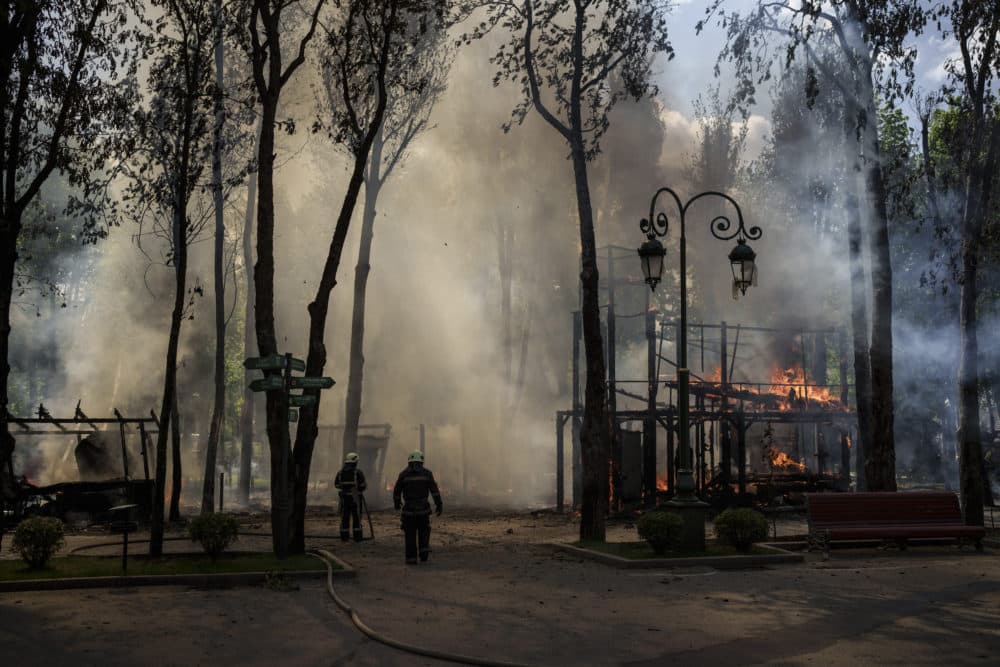
 Firefighters extinguish a fire following a Russian bombardment at a park in Kharkiv, Ukraine, Tuesday, May 3, 2022. (Felipe Dana/AP)

How idiosyncratic is the human animal.

There is among us higher primates

those whose pure goodness and

inherent decency acts as a balm to the

wretched misery imposed by the race's

psychopaths caring nothing for the

pain and suffering their actions cause

to others. And among that species is a

sub-species whose glaring impacts on

the human weal destructively ferocious

in its impact to achieve an end fostering 

power and command on behalf of tyrannies

resulting in populations reeling in pallid

self-defense for which there is no solace

to the massive onslaughts perpetrated

by their tormentors reflect a world where

the powerless may be persecuted without

end. Where foreign powers look on

with dismay insufficient to mount aid

rescuing the unfortunate from the doom 

blackening their horizon and robbing

their futures. From Hitler to Stalin, Mao

to Pol Pot, Saddam to Assad and Putin

whose hatred aligned with their pernicious 

egotistical hubris and misanthropy for

whom bloodshed was merely a means to

their desired end mounted upon the legions

of defenceless whom they exterminated

the world of humanity deplored and wept

seeing fit to surrender to apathy restraining

any efforts, however pitiful, to intervene